New Doors & Openers
How long garage doors and their parts really last
· 12 min read · From the B&B Garage Doors office, Traverse City
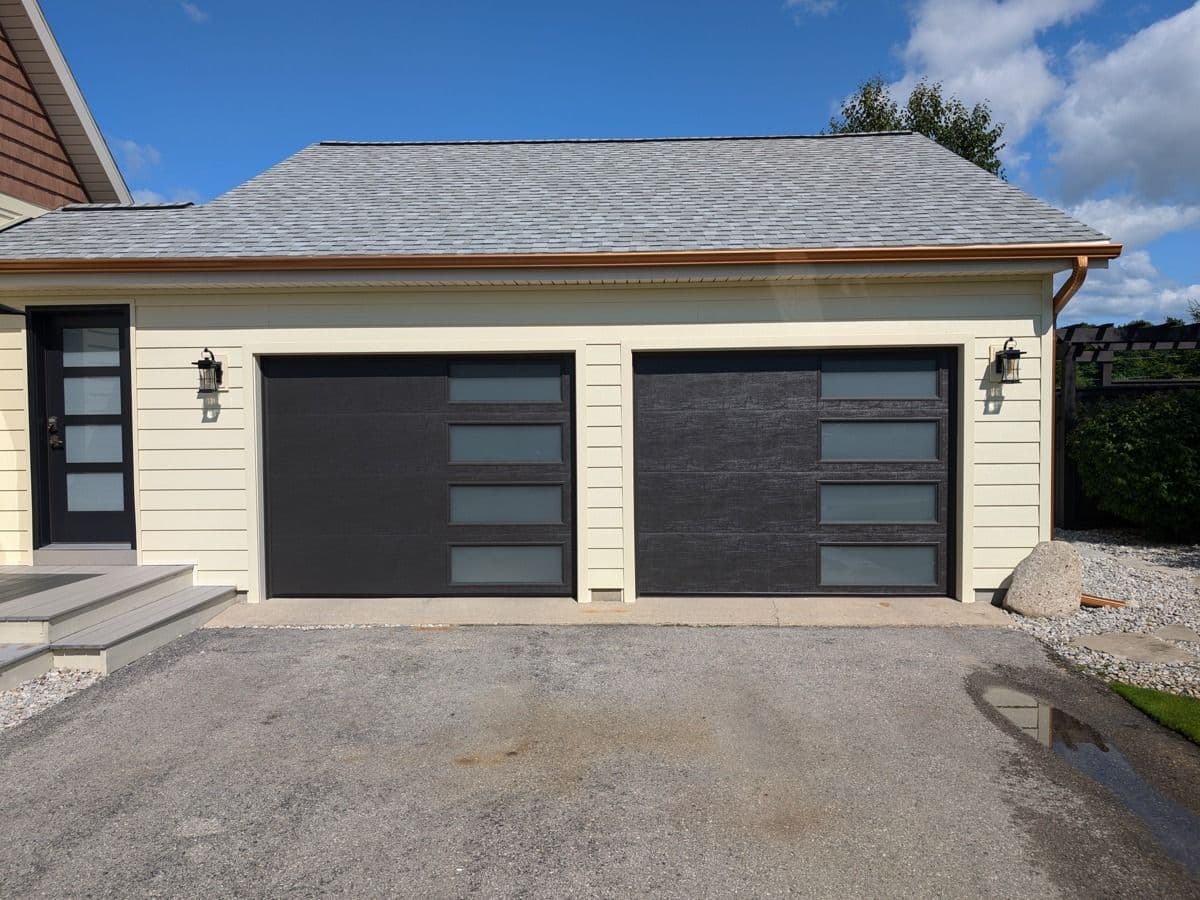
A garage door's sections usually outlast the parts that move them. Amarr puts a single-layer steel door at about 15 to 20 years and a triple-layer steel door at 25 to 30. Springs wear by use, and Clopay says most are designed for 10,000 cycles. Openers, rollers, cables and seals depend on use and care.
Wondering how much life your door has left?
Call the office · Mon to Fri · 7:30 am to 4:00 pm · Free estimates
How long do garage doors last
The door itself usually lasts longer than the parts that move it. Amarr, a garage door manufacturer, says in its guide to garage door lifespan that a single-layer steel door can last around 15 to 20 years and a triple-layer steel door as long as 25 to 30, and that an aluminum door can last up to 30 years with proper care.
Those figures are for the sections, the hinged panels that make up the door. Springs, rollers, cables, seals and the opener run on their own clocks, and most of them are replaced at least once while the sections are still sound. DASMA, the door manufacturers' association, makes the same point from the other side. Its data sheet on spring cycle life notes that spring life may not coincide with door life.
So the honest answer has two parts. The sections can serve for decades, and the parts that carry them wear with every trip. Amarr's overall guidance is to consider replacing a garage door after 15 to 30 years, depending on the material.
How long does each part of a garage door last
It varies by part, and for several parts we could not find a number from a manufacturer or a safety agency. The table lists what the sources we read actually say.
Where it says no sourced figure, the part's life depends on how often the door runs and how it is cared for.
| Part | What the sources say | What wears it out | Sign it is near the end |
|---|---|---|---|
| Single-layer steel sections | About 15 to 20 years (Amarr) | Dents, moisture and salt | Corrosion or holes |
| Triple-layer steel sections | About 25 to 30 years (Amarr) | Impact and moisture | Corrosion or heavy dents |
| Aluminum sections | Up to 30 years with proper care (Amarr) | Impact and neglect | Holes or heavy dents |
| Wood sections | No sourced figure | Moisture and pests | Soft or rotted wood |
| Springs | Most are designed for 10,000 cycles (Clopay) | Every trip up and down and rust | Door feels heavy or drifts down |
| Opener | No sourced figure | Heavy use and an unbalanced door | Straining or failing the reversal test |
| Rollers | No sourced figure | Use and dry bearings | Rough or noisy travel |
| Lift cables | No sourced figure | Use and corrosion | Fraying or loose strands |
| Bottom seal and weatherstripping | No sourced figure | Sun and cold and ice | Cracks or a draft under the door |
How long do garage door springs last
Springs last a set number of cycles, not a set number of years. Clopay says most garage door springs are designed to last 10,000 cycles, where one cycle is the door going up and down once.
How fast you spend those cycles is up to your household. Clopay's spring system guide puts the average garage door at about 1,500 open and close cycles a year, which would use up a 10,000 cycle spring in under seven years. A cottage door that opens on summer weekends takes far longer to reach the count, though rust and long idle winters work on it in the meantime.
The type of spring matters too. Clopay says torsion springs are built to last significantly longer than extension springs, and our guide to torsion vs extension springs shows how to tell which you have. Either way, DASMA's data sheet on spring cycle life says rust reduces the strength of spring wire and that regular lubrication helps maximize cycle life.
How long does a garage door opener last
It depends on how often it runs and how well the door is balanced. We could not find a lifespan figure published by an opener manufacturer, so we are not going to hand you one.
What is well documented is the safety cutoff. The U.S. Consumer Product Safety Commission says all openers manufactured or imported for sale in the United States after January 1, 1991 must have a reversing system, and that a requirement for external entrapment protection, such as an electric eye, was added in 1993. The CPSC urges homeowners to replace older openers that do not automatically reverse. An opener with no sensors near the floor is at the end of its life however well the motor runs.
For everything newer, condition matters more than the date on the label. An opener is meant to move a door the springs have already balanced. When the springs weaken, the opener does lifting it was never built for, and that wears out gears and motors faster.
If yours is noisy, slow or unreliable, our guide on whether to repair or replace a garage door opener sorts the fixable failures from the ones that are not worth chasing.
How long do the small parts of a garage door last
Rollers, cables, hinges and seals last until they show wear, and none of the sources we read puts a number of years on them. Clopay's service and replacement guide describes each one by its warning signs, which is the more useful way to think about them.
- Rollers: Clopay says rollers that no longer move smoothly or quietly may need lubrication or replacement. Steel rollers get lubricated once a year, and nylon rollers do not.
- Lift cables: look for fraying or loose strands at the sides of the door. Clopay warns that frayed cables could cause serious injury or property damage, and replacing them is a professional job.
- Hinges: Clopay says to replace hinges that are bent or broken. Leave the brackets at the bottom corners alone, because they must not be removed while the door is under tension.
- Bottom seal: replace it when it is cracked, visibly worn or letting a draft of cold air under the door. Our guide to bottom seals and weatherstripping covers the details.
- Tracks: bent, twisted or loose tracks are a repair. Clopay says you may tighten loose bolts but should not try to repair damaged track yourself.
What shortens the life of a garage door in Northern Michigan
Salt, moisture, hard cold and long stretches of sitting still. Amarr lists extreme temperatures, humidity, snow and salt among the things that damage a door over time, and our winters supply all of them.
- Road salt: salt and slush ride in on the car all winter and collect at the floor line. The bottom section and the bottom corners where the cables attach take the worst of it.
- Freeze and thaw: meltwater that gets under a worn bottom seal can freeze the door to the floor. Forcing a frozen door with the opener puts real strain on the opener and the cables.
- Damp lake air: DASMA says rust reduces the strength of spring wire and can start the pits that fatigue cracks grow from. Garages close to the water see more damp air than garages inland.
- Unheated buildings: Clopay says springs break most often in cold weather, which makes the metal more brittle, and that extreme cold can make openers fail.
- Seasonal use: a cottage door that sits closed from fall to spring is not saving itself. It can come back with rusty hardware, stiff rollers and a spring that broke while no one was around.
How do Benzie County winters wear on a garage door
Along the Lake Michigan shore the weather does the wearing, and inland the long cold and the drifts take over.
Frankfort is a harbor town on Betsie Bay, where the Betsie River meets Lake Michigan. Homes near the beach and on the hills above town face that weather head on, and wind-driven snow and cold find every gap in a door. Older houses in town often have detached garages with doors that have seen decades of it. North on M-22 past Point Betsie Lighthouse, cottages closed for the winter can come back with rusty hardware.
Beulah sits at the southeast end of Crystal Lake with US-31 running past, close enough to Lake Michigan to catch its lake-effect snow. In summer a garage there doubles as parking, boat storage and a place to sit, so the door works hard for a few months. Then, on a seasonal cottage, it stays shut from fall to spring.
Lake Ann is wooded and rural, with larger lots in Almira Township that have room for a pole barn or detached shop. Those buildings often carry oversize doors, and the roads between M-72 and US-31 cross open ground where lake-effect snow drifts. We cover all of Benzie County from our office south of Traverse City.
What makes a garage door last longer
Keeping the door balanced, lubricated and looked at once a year. DASMA says regular lubrication of springs helps maximize their cycle life, and Amarr lists lubricating moving parts, tightening hardware and periodic inspections as the habits that extend a door's life.
Most of it is simple, and none of it involves touching a spring, a cable or a bottom bracket.
- 1Look the door over every monthThe CPSC says to inspect the garage door and the opener every 30 days. Watch it run and look for anything loose, frayed or rusted.
- 2Check the balanceThe CPSC describes a properly working door as one that stays in place when stopped partway open. Our garage door balance test shows the safe way to check, starting with the door fully closed.
- 3Test the opener's reverseThe CPSC test is a 2x4 on the floor in the door's path. If the door does not reverse when it strikes the board, stop using the opener until it is adjusted, repaired or replaced.
- 4Lubricate once a yearClopay's guide calls for yearly lubrication of the hinges, the steel rollers and the torsion springs. Spray and wipe only, and keep hands and tools off the springs.
- 5Keep the tracks cleanWipe dirt, leaves and grit out of the tracks. Amarr notes that debris carried onto the tracks can damage the door's mechanics.
- 6Replace seals when they crackClopay says to inspect the bottom seal before winter and replace damaged sections. A sound seal keeps meltwater from freezing the door down.
- 7Do not add weight to the doorDASMA warns that paint or components added to a door can push it past the weight its springs were matched to.
- 8Book a yearly tune-upA garage door tune-up covers the springs, cables, rollers, hinges, tracks, opener, sensors and seals in one visit. Fall is the best time in Northern Michigan.
What are the signs a garage door is near the end
The signs are in the sections, not the hardware. Worn springs, rollers, cables and seals are repairs on a sound door. A door is near the end when the panels themselves are failing, and Amarr's list of warning signs reads much like ours.
If your door shows some of these, our guide on whether to repair or replace a garage door walks through the decision with a chart, so we will not repeat it here.
- Corrosion, holes or rust that has gone through the steel.
- Rot or soft wood on a wood door.
- A door that no longer closes fully or runs the way it should.
- Gaps or damage that let heated air out of an attached garage.
- Parts that are long obsolete, so a damaged section cannot be matched.
- Wear across the whole door and not in one spot.
Is an old garage door still safe to use
Often yes, if it is balanced, its opener reverses and its springs and cables are sound. Age by itself does not make a door unsafe. Condition does.
The CPSC warns that a severely unbalanced door could unexpectedly crash to the floor, and says doors that are out of balance or that bind or stick should be serviced by a professional.
So an older door earns its keep by passing a few checks. It holds partway open, it reverses on a 2x4, nothing is frayed or cracked and the sections are solid. If you just bought the house and do not know the door's history, a tune-up answers the question in one visit.
Sources
- 1.Average Lifespan of a Garage Door: Do I Need a New Garage Door? · Amarr Garage Doors
- 2.Do I Have a Broken Garage Door Spring? · Clopay
- 3.Garage Door Spring Systems: A Buying Guide for Homeowners · Clopay
- 4.Garage Door Replacement Parts Guide · Clopay
- 5.TDS 190: Factors Affecting Spring Cycle Life · DASMA (Door & Access Systems Manufacturers Association)
- 6.Non-Reversing Automatic Garage Door Openers Are a Hazard (Publication 523) · U.S. Consumer Product Safety Commission
Free estimate
Have our crew take a look
One short form and our office calls you back during business hours. Most repairs are finished on the first visit, and every truck rolls out stocked.
Or call the office(231) 360-5442Mon to Fri · 7:30 am to 4:00 pm · Closed weekends
Request service
About a minute. Our office calls you back.