B&B Garage Doors and More

Fire Doors · Inspection & Service

Fire door inspection that keeps your building ready and your records clean

Fire Doors by B&B Garage Doors in Northern Michigan
5.0★★★★★200+ Google reviews
A+BBB rating
insured
Call the officeMon to Fri · 7:30 am to 4:00 pm
FreeEstimates
Father and son owned
Contact

B&B Garage Doors inspects, tests, repairs and services fire doors, including rolling fire doors and fire-rated counter shutters, for businesses and public buildings across Traverse City and Northern Michigan. NFPA 80 calls for fire door assemblies to be inspected and tested at least once a year by a qualified person, with written records kept. Tony and Jake Bailey are both fire door certified and handle this work.

A rolling fire door has to close on its own

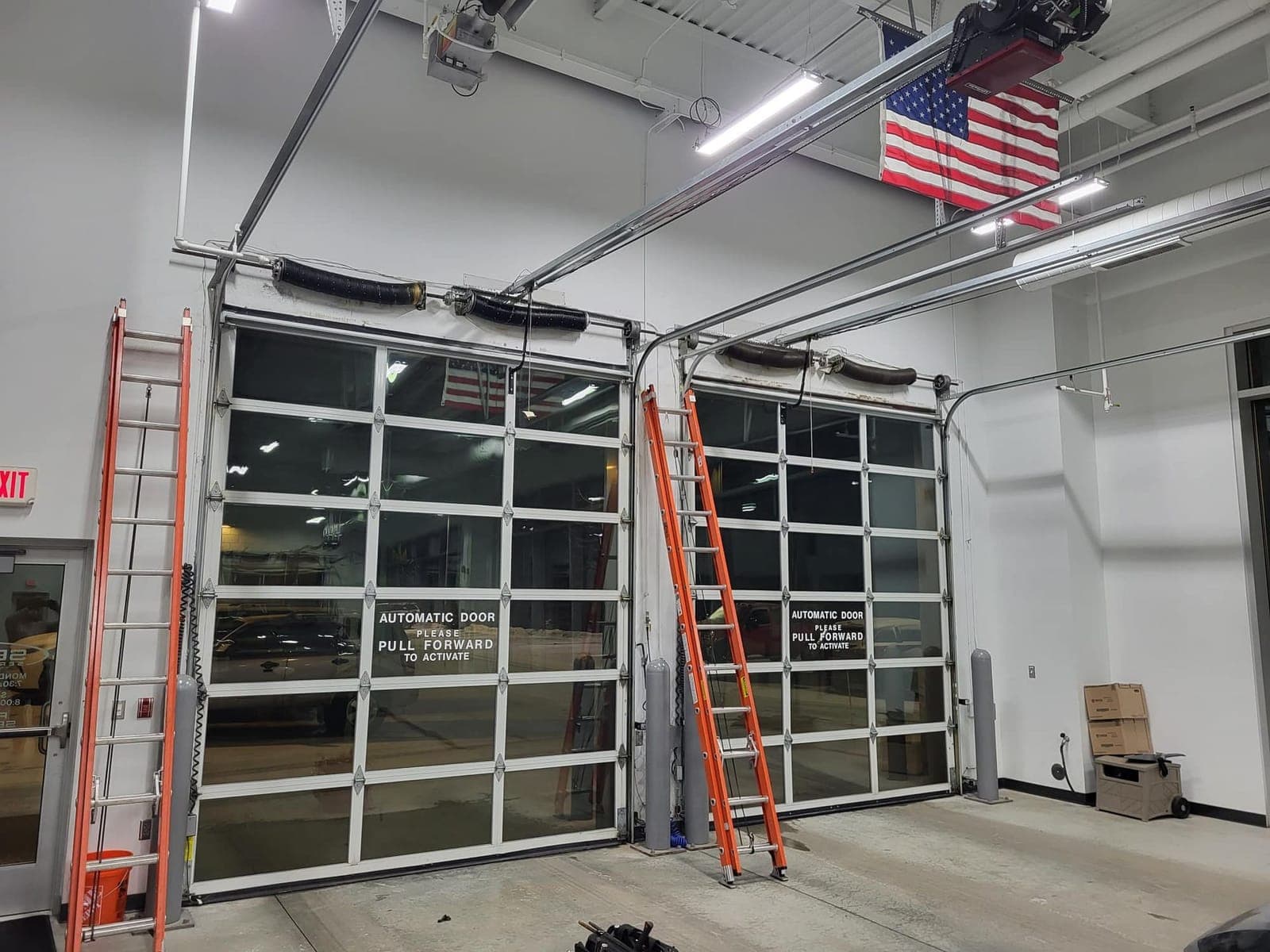
Most of the time a rolling fire door sits coiled up out of sight above an opening. It has one job: when there's a fire, it has to come down and close that opening completely, with nobody touching it.

That automatic closing is triggered by a fusible link that melts at a set temperature or by a signal from the building's fire alarm system. A governor controls the door's speed on the way down so it closes steadily instead of slamming.

The trouble is that a door that sits open for years can quietly stop working. Links get painted over, guides get bent, springs lose tension and storage creeps into the path of the door. Annual testing is how you find that out before a fire does.

Some openings use fire-rated counter shutters instead of full-size doors, at a kitchen pass-through or a service window between rooms. They close the same way and need the same yearly attention.
What NFPA 80 asks of building owners

NFPA 80 is the standard that covers fire doors and other opening protectives. It requires fire door assemblies to be inspected and tested at least annually by a qualified person, and it requires written records of those inspections and tests.

Those records matter. Fire inspectors, insurance carriers and the authority having jurisdiction in your area can ask to see them. A door that works perfectly but has no paperwork can still leave you with a problem during an inspection.

We document each door we inspect and test, including its location, what we checked, what we found and anything that needs correcting, so you have a clear record to hand over when someone asks.

What happens during a drop test

A drop test releases the door the way a fire would. We trigger the release and watch the door come down on its own, confirming that it closes fully, that it travels at a controlled speed and that the bottom bar seats against the floor.

Around the test we inspect the rest of the assembly:

  • Labels on the door and frame are in place and readable
  • Fusible links are clean, unpainted and correctly installed
  • Guides, curtain and bottom bar are straight and undamaged
  • The hood and coil area are free of damage and debris
  • Nothing is stored in the path of the closing door
  • The release device and any alarm connection operate correctly

Resetting the door is part of the job

After a drop test, a rolling fire door has to be reset properly: the curtain raised, spring tension restored and the release mechanism set so the door is ready to close again. A door that was tested and never reset correctly can be worse off than one that was never tested.

We reset every door we test and run it again to be sure it's back in its ready position before we leave. Since a drop test closes the opening, we'll work with you on timing so it disrupts your operation as little as possible.

Repairs that respect the fire rating

When an inspection turns something up, we can usually repair it on the spot or on a return visit: replacing fusible links, straightening or replacing guides, repairing the curtain, adjusting spring tension and correcting the release and closing mechanism.

Fire doors are tested and labeled as complete assemblies. Changes made with the wrong parts, extra holes drilled for signs or hardware, or paint over labels and links can compromise the rating. Repairs should be done by someone who knows how these assemblies are built, which is exactly why Tony and Jake hold their fire door certification.

One crew for every door in the building

Buildings with rolling fire doors usually have overhead doors, rolling steel doors or counter shutters too. Since Tony and Jake are both fire door and rolling steel certified, we can handle the fire door testing and the everyday door service under one call to our office. Call Monday to Friday, 7:30 am to 4:00 pm, to schedule your annual inspection.

If you've taken over a building and have no idea when its fire doors were last tested, that alone is a good reason to start with an inspection now.

12345678

What we check

Anatomy of a fire door

  1. 1Hood and barrel. Houses the coiled curtain and its counterbalance springs, like any rolling door.
  2. 2Fusible link. A heat-sensitive link that separates in a fire so the door can close on its own.
  3. 3Release device. Holds the door open day to day and lets it go when the link separates or a connected alarm trips.
  4. 4Governor. Controls the closing speed so the curtain comes down steadily instead of free-falling.
  5. 5Guides. Anchor the assembly to the fire-rated wall and steer the curtain as it drops.
  6. 6Bottom bar. Has to reach the floor and seat fully. A door that stops short fails its drop test.
  7. 7Rating label. Shows the assembly's fire rating. A missing or painted-over label gets written up.
  8. 8Clear path. Anything stored where the curtain lands can stop it closing, and inspectors flag it.
Do fire doors need to be inspected every year?

Yes. NFPA 80 requires fire door assemblies to be inspected and tested at least once a year, and rolling fire doors are drop tested as part of that. The inspections have to be documented with written records. Your local fire inspector or insurer may ask to see them.

Who is allowed to inspect and test a fire door?

NFPA 80 calls for the inspection and testing to be done by a qualified person with knowledge of the doors being tested. Tony and Jake Bailey are both fire door certified and perform this work for our customers. Your local authority having jurisdiction has the final say on what it will accept.

What is a fusible link on a fire door?

A fusible link is a small metal link that holds a rolling fire door's release in place and melts at a set temperature during a fire. When it lets go, the door closes on its own. Links should never be painted, and damaged or painted links should be replaced.

Will a drop test damage my fire door?

A properly working fire door is designed to close this way, so a drop test shouldn't harm it. If a door does struggle or stop partway, the test has done its job by finding a problem before a real fire. We reset the door afterward and confirm it's ready.

Can I paint a fire door or hang a sign on it?

Be careful. Paint over the labels, fusible links or moving parts can keep a fire door from working or being approved, and drilling holes for signs or hardware can compromise the assembly's rating. Ask us before making any change to a fire door.

Can a damaged rolling fire door be repaired instead of replaced?

Often it can. Bent guides, damaged slats, worn links and out-of-adjustment springs can usually be repaired while keeping the assembly intact. If the damage is too extensive, we'll explain your options and quote a replacement free.

Get it fixed

Let's get your door moving again

Call the office or send a request and we'll call you back during business hours. Estimates are free and most repairs are finished on the first visit.

Call the office

(231) 360-5442Call the officeMon to Fri · 7:30 am to 4:00 pm