New Doors & Openers
What a wind rated garage door does for a shoreline home
· 12 min read · From the B&B Garage Doors office, Traverse City
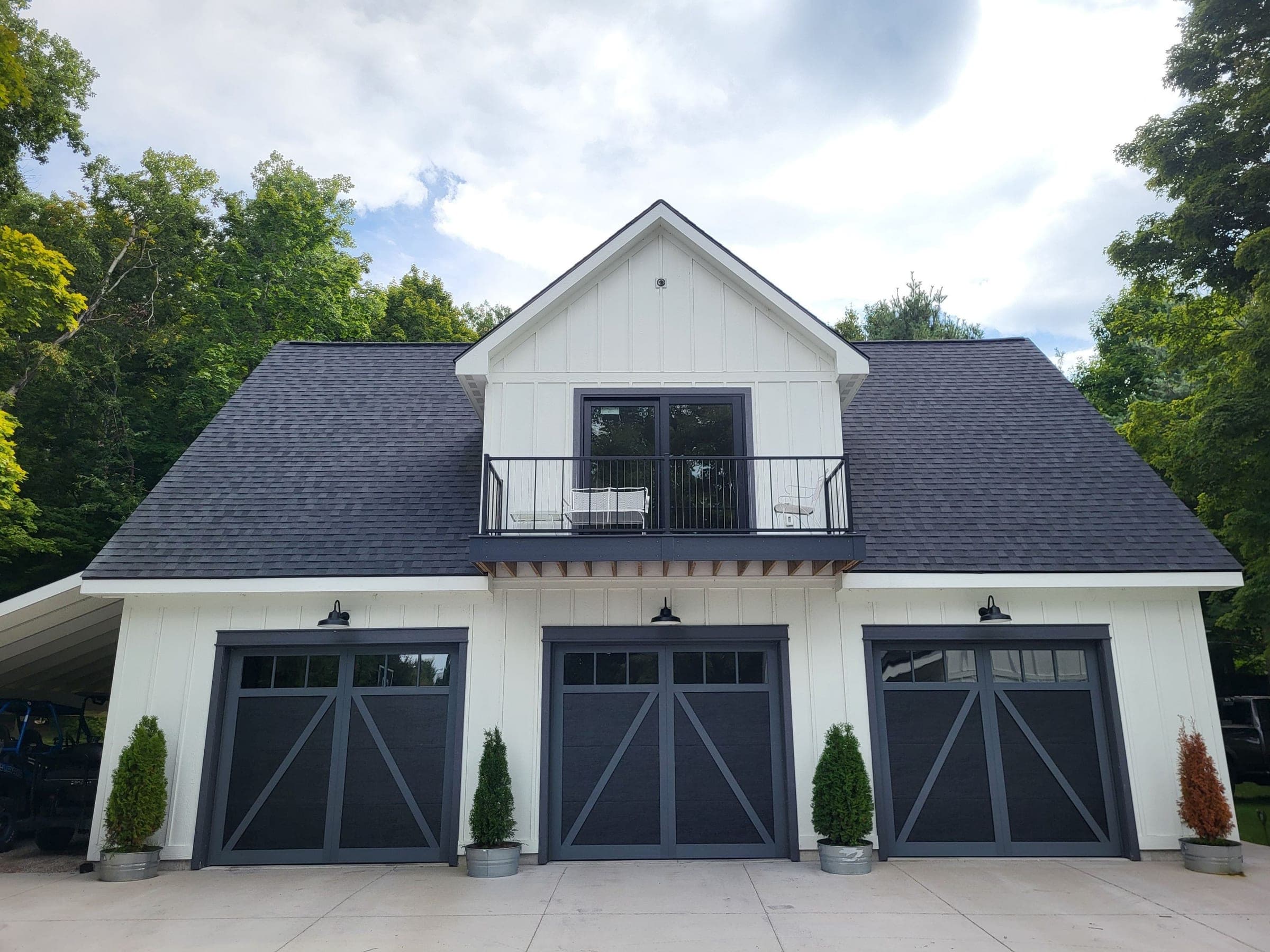
A wind rated garage door is built and tested to resist a stated design pressure, both pushing in and pulling out. On a shoreline lot the garage door is usually the largest opening in the house, so ask your local building department what pressure your site calls for and choose a door rated to meet it.
Garage door facing open water?
Call the office · Mon to Fri · 7:30 am to 4:00 pm · Free estimates
Why is the garage door the weak spot on a windy shoreline home
Because it is usually the largest opening in the building, and wind can both push it in and pull it out. DASMA Technical Data Sheet 152 opens with that point: garage doors are typically in the largest openings on a structure, and a door is subject to being blown into the garage or pulled out of the opening.
What follows is the bigger worry. DASMA warns that a garage door left open in a high wind event leaves the interior walls, ceilings and roof structure vulnerable to structural damage. A door pushed out of its opening leaves the garage just as exposed.
A two car door facing Lake Michigan or Grand Traverse Bay is a broad, flat surface with nothing upwind but water, so a shoreline quote should cover the rating, the fastening and the seals, not just the color.
What does wind load rated mean on a garage door
It means the door was tested to resist a stated design pressure, measured in pounds per square foot, in both directions. DASMA's wind FAQ, TDS 168, explains that positive pressure tries to push the door into the building and negative pressure tries to pull it out, which is why a rating carries both a positive and a negative number.
The rating belongs to a whole assembly, not just the panels. DASMA notes in TDS 153 that manufacturers commonly specify horizontal reinforcement, called struts, to make doors wind load resistant, and in some cases a vertical post system as well.
Testing has margin built in. TDS 168 says the test load a door must sustain in a pressure test such as ANSI/DASMA 108 is commonly 1.5 times the design load, and that an independent testing agency or professional engineer certifies the results.
| Term | What it means | Why it matters to you |
|---|---|---|
| Design pressure | The pressure in pounds per square foot the door is rated to resist | It has to meet what the building department requires for your site |
| Positive and negative pressure | Wind pushing the door in and wind pulling it out | A rating needs both numbers |
| Test load | The highest pressure the door held in testing, commonly 1.5 times the design load | Shows the rating has margin |
| Struts | Horizontal reinforcement specified by the door maker | They add weight, so springs and track are matched to them |
| Exposure category | How open the land around the house is, from B to D | Open water raises the pressure for the same wind speed |
| Impact rated | Door and glass tested against windborne debris | Ask the building department whether your area calls for it |
Why can't you buy a garage door by wind speed alone
Because doors are tested to pressures, not wind speeds, and the same wind speed puts very different pressure on different houses. DASMA lists the other variables, among them exposure category, topography, where the door sits on the building, door size, mean roof height and which building code is in force.
Exposure matters most on the water. TDS 168 describes Exposure B as urban, suburban and wooded terrain with closely spaced obstructions, Exposure C as open terrain with few obstructions and Exposure D as flat, unobstructed areas and water surfaces. A given wind speed produces the least pressure in B and the most in D.
The gap is large. In DASMA's wind load guide for the 2021 and 2024 International Residential Code, the charted pressures for a house with a 15 foot mean roof height are multiplied by 1.48 for Exposure C and by 1.80 for Exposure D. That guide is a reference only. Which code and which exposure apply to your lot is the building official's call.
Height counts too, since DASMA says wind generally moves faster higher above the ground. Turning the garage away from the lake does not lower the number: TDS 168 says the compass direction a door faces does not affect design pressure, because worst case winds toward and away from the door are both considered.
Who decides what wind rating your garage door needs
Your local building department does. DASMA puts it plainly: the building department having authority in your area is the sole and final determiner of the wind load requirements for your garage door, and you should always check with a county or local municipal building official.
We are not going to print a Michigan wind speed or pressure here, because the right figure depends on your lot and the code your township enforces. Safe-Way Door, one of the lines we install, tells buyers the same thing in its guide to choosing a garage door: you may live in a county that requires doors to withstand certain wind pressures, and the requirements for your location are the thing to confirm.
- 1Call the building departmentAsk the county or township office that issues your building permits what design wind pressure, positive and negative, applies to a garage door at your address. Have the door size and the number of stories ready.
- 2Ask about a replacement doorDASMA notes that the authority having jurisdiction also decides which wind load provisions apply to a retrofitted door, so ask whether replacing an existing door changes anything.
- 3Check with your insurerDASMA says insurers may impose their own requirements, and suggests asking whether any mitigation discounts would influence which door you choose.
- 4Bring the answer to your estimateGive us the figure and we will check with the makers we install for a door rated to meet it.
Can you reinforce the garage door you already have
Not on your own, and not by bolting on parts the manufacturer did not specify. DASMA warns that adding weight to a door, particularly non-manufacturer-specified reinforcement, can create a dangerous situation, because the supporting tracks and other components may not be suitable to carry it.
Done properly, reinforcement is a package of matched springs, hardware and supporting track installed by a trained door systems technician. TDS 153 adds that an aftermarket post not purchased from or specified by the door maker may not result in a door that properly resists the wind.
The opening matters as much as the door. DASMA notes that the attachment of the door track and the door jamb to the structure is just as critical as the strength of the door itself, and that the supporting structure is the general contractor's responsibility, not the door installer's. On an older cottage with soft or rotted jambs, the framing may need repair before any door goes in.
What should you do with the garage door before a big windstorm
Close it, secure it and leave it alone until the wind drops. Those are DASMA's instructions in TDS 152, and none of them needs a tool.
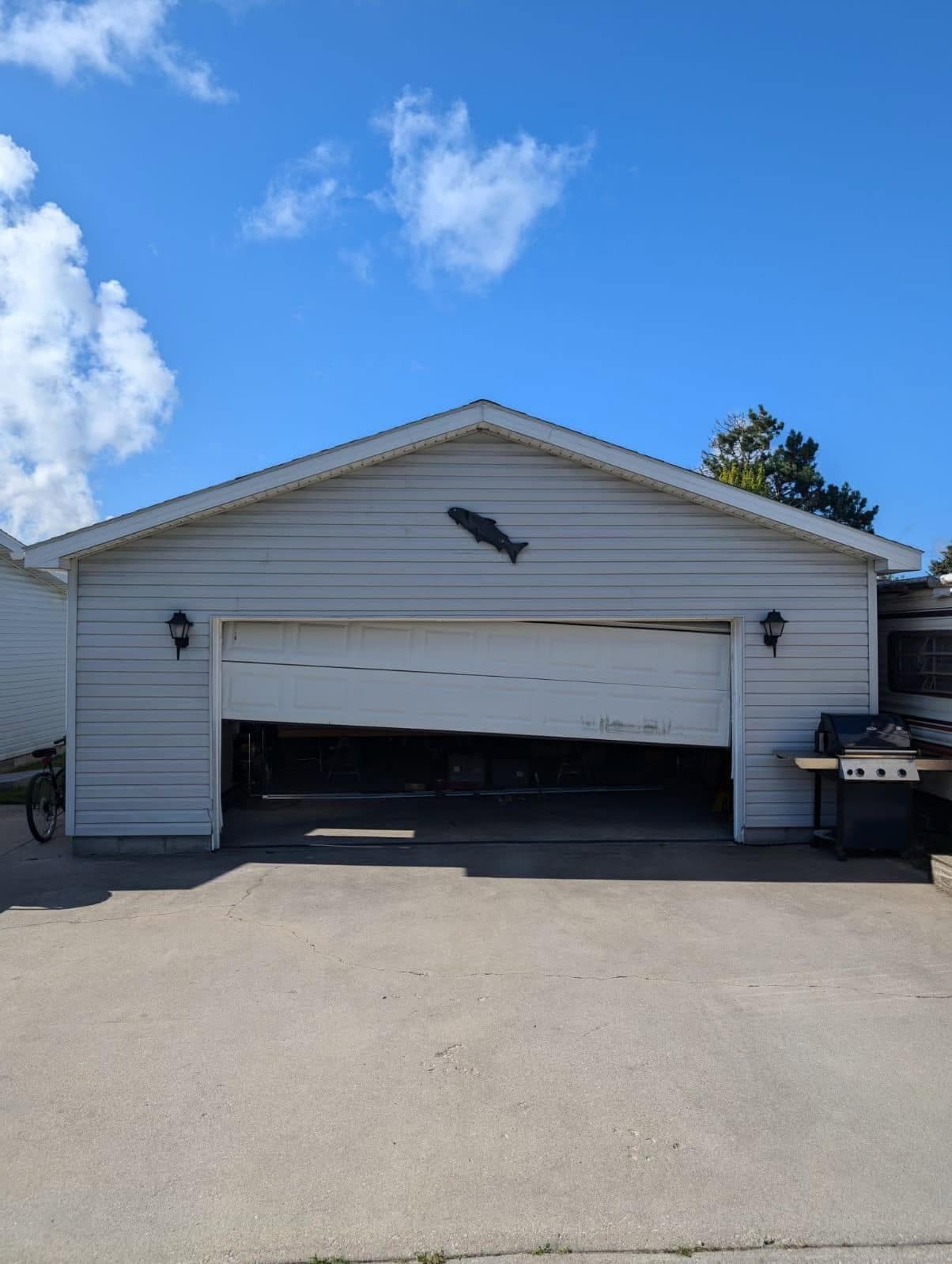
If a storm does bend a section or pull a roller out of the track, do not run the door. Our garage door repair crew handles both, and most repairs are finished on the first visit.
- 1Close the door all the wayDASMA says a garage door should be closed and secured before a high wind event. An open door gives the wind a path to the walls, ceiling and roof.
- 2Secure it the way the manufacturer saysFollow the door's own documentation. If your door came with a post system for wind, set it as instructed and unplug the opener, which is what DASMA advises while a post is in place.
- 3Do not park a car against itDASMA says positioning a vehicle against the door does not reinforce it and may damage both the vehicle and the door.
- 4Do not run the door during the stormDASMA does not recommend operating garage doors during high wind events, because the extra force needed can cause injury or damage the door.
- 5Look it over before you press the buttonOnce the wind is down, check for a bent section, a roller out of the track or a door sitting crooked.
What finishes and hardware hold up to lake air
Galvanized steel, aluminum and composite hold up with the least upkeep, and real wood asks the most. Damp air off the lake sits on a door and its hardware for months, so what is under the paint matters.
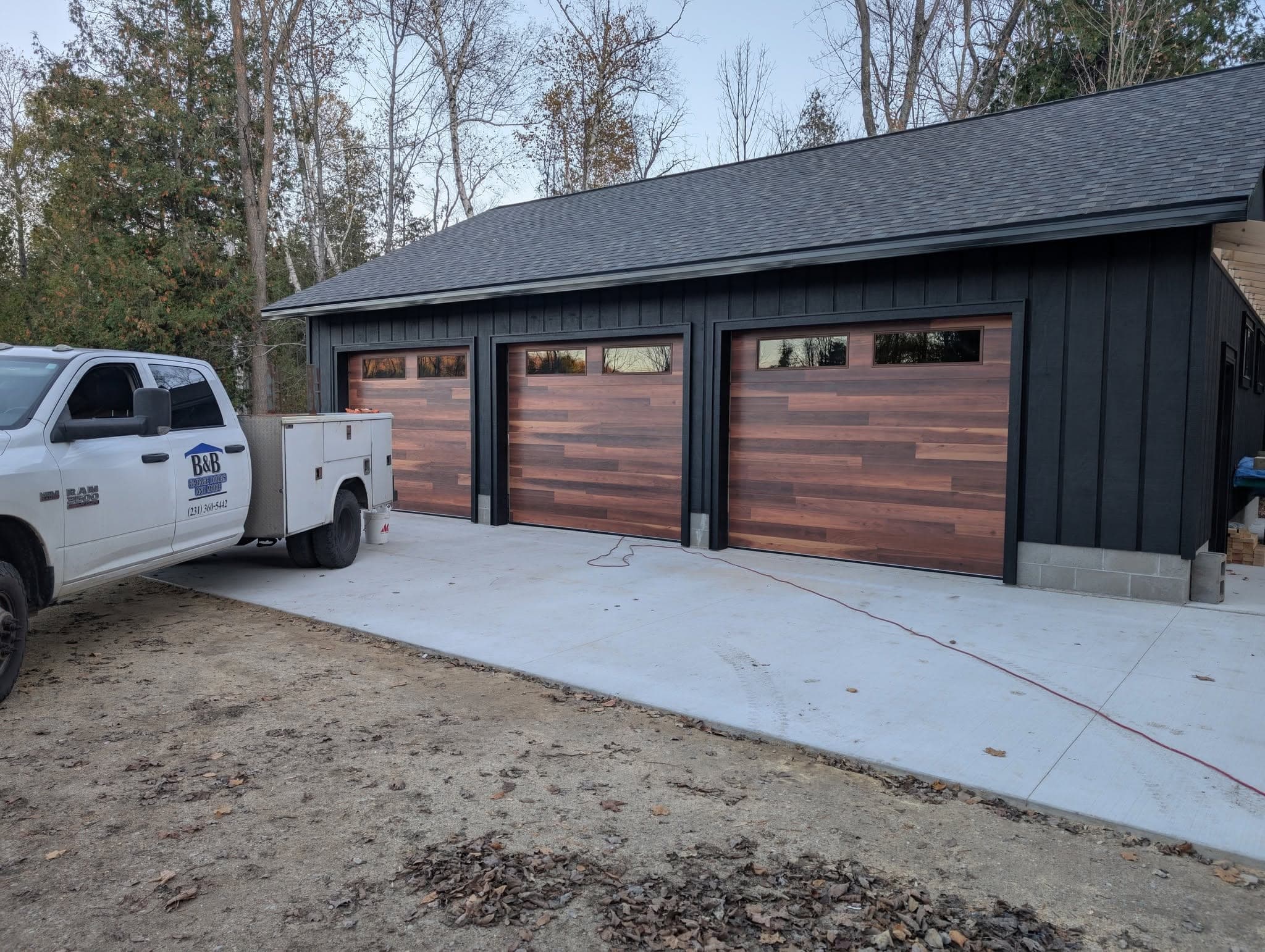
Haas Door, one of the lines we install, builds its American Tradition carriage house series with 26-gauge galvanized steel or 24-gauge aluminum skins and polyurethane overlay boards, and lists the series as available with wind load and impact options. A rated door does not have to look plain.
Composite overlay doors, like the custom doors Eden Coast builds, give the look of wood without the rot. Real wood takes on moisture, so its finish has to be kept up.
- Rinse road salt and grit off the lower sections and touch up chips in the paint.
- Where sand blows, as it does around Glen Arbor, keep the tracks wiped clean. Fine sand works into tracks and rollers.
- At a seasonal place, have the door checked when you open up. A door that sat all winter near the lakeshore can come back with rusty hardware.
How do you keep blowing snow out from under the door
With a bottom seal that still has its shape and weatherstripping that touches the door all the way around. Wind-driven snow finds every gap, and on an exposed lot the seals along the bottom, sides and top matter more than they do in a sheltered spot.
The rubber seal along the bottom and the stop molding around the sides and top crack, flatten and pull away after a few seasons of sun and cold. Worn seals let in drafts, let meltwater pool on the floor and let the bottom edge freeze to the concrete. Our guide to garage door bottom seals and weatherstripping covers what to look for.
Section joints count too. Haas lists an air infiltration joint seal on some of its American Tradition models, and a stiffer insulated door flexes less when a gust hits it.
After a storm, clear drifted snow from the bottom of the door before you run the opener. Pushing a door against a drift strains the opener and can pull the door out of its track.
Where in Northern Michigan does wind off the water matter most
Anywhere a garage door looks out over open water, which describes much of Leelanau, Benzie and the bay shore.
Old Mission Peninsula is only about three miles across at its widest, so very little of it sits far from water. Homes along Peninsula Drive and the East Bay shore take wind straight off Grand Traverse Bay.
On the Lake Michigan side there is even less shelter. Leland sits on a strip of land between Lake Michigan and the north end of Lake Leelanau, and Glen Arbor sits between Sleeping Bear Bay and Glen Lake, where sand and wind are part of life. We cover the rest of Leelanau County from the same office.
South along M-22, Frankfort faces Lake Michigan weather head on, from the homes near the beach to the hills above Betsie Bay and on past Point Betsie Lighthouse toward Crystal Lake in Benzie County. Across the bay, Elk Rapids has East Grand Traverse Bay on one side and Elk Lake on the other, so wind and drifting snow come at it from both.
What should you ask on a wind rated garage door quote
Ask for the rating in pressure, how it was tested and exactly what hardware comes with it. DASMA's own wording is that it is not enough to say a product will meet a given wind speed alone.
- What positive and negative design pressure is this door rated to, and does that meet what my building department requires?
- Is the rating for this exact size, model and window layout? DASMA notes that approval documents typically specify the glazing type and how many sections are glazed.
- What reinforcement does it include, and are the springs, track and hardware new and matched to the door's weight?
- How will the track and jambs be fastened, and are my jambs and header sound enough?
- What are the skins made of, and how is the finish cared for near the lake?
- Which seals are included at the bottom, sides, top and section joints?
Sources
- 1.Technical Data Sheet #152: Garage Doors and High Wind Events · DASMA
- 2.Technical Data Sheet #168: Wind on Garage Doors: Frequently Asked Questions · DASMA
- 3.Technical Data Sheet #155aa: Garage Door Wind Load Guide for the 2021 and 2024 International Residential Codes · DASMA
- 4.Technical Data Sheet #153: Vertically Reinforcing Sectional Garage Doors for Wind Load Conditions · DASMA
- 5.Choosing the Right Garage Door for Your Home · Safe-Way Door
- 6.American Tradition 9000 Series Carriage House Garage Doors · Haas Door
Free estimate
Have our crew take a look
One short form and our office calls you back during business hours. Most repairs are finished on the first visit, and every truck rolls out stocked.
Or call the office(231) 360-5442Mon to Fri · 7:30 am to 4:00 pm · Closed weekends
Request service
About a minute. Our office calls you back.