Winter & Weather
How to tell when a garage door bottom seal needs replacing
· 11 min read · From the B&B Garage Doors office, Traverse City
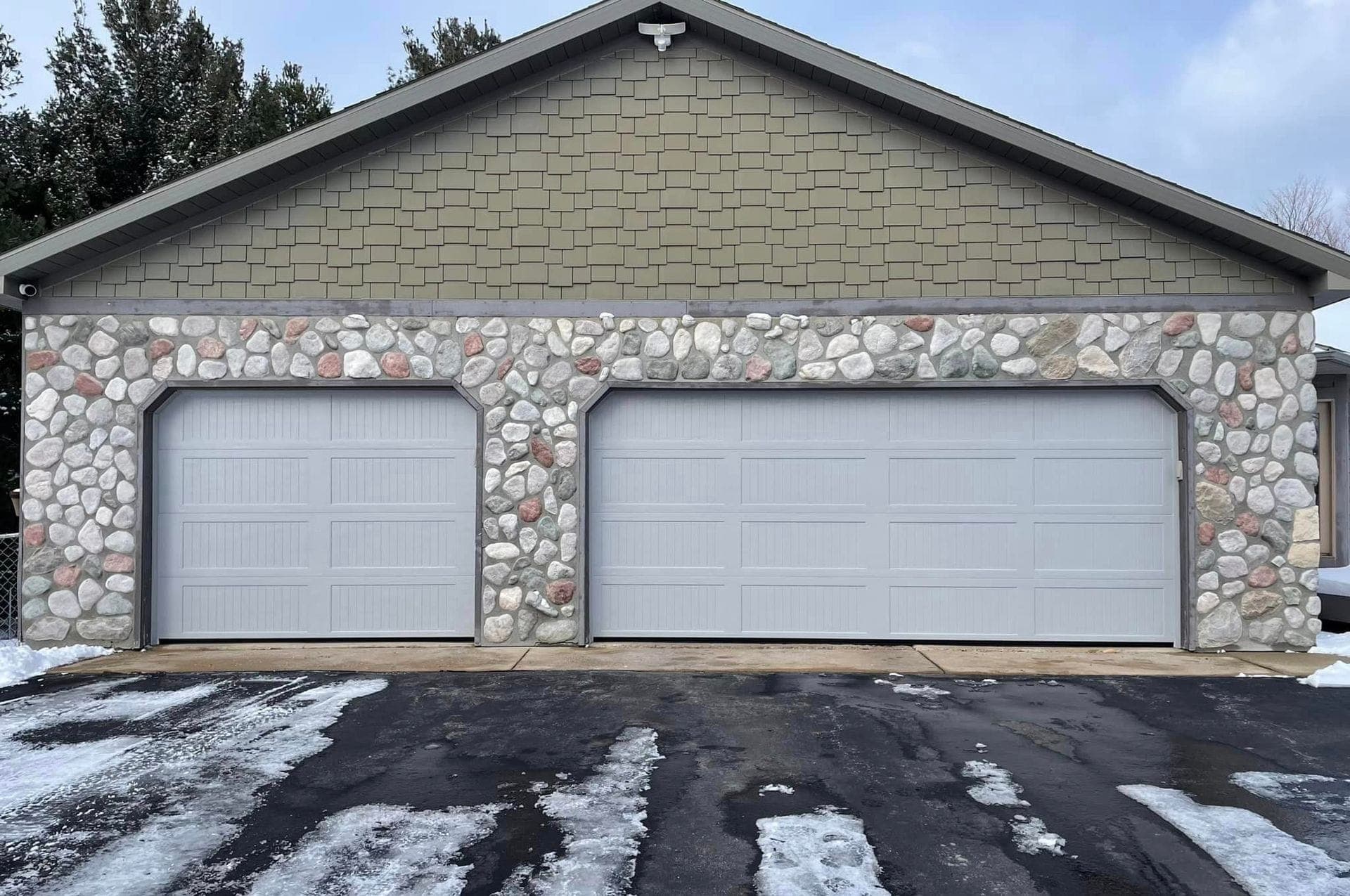
A garage door bottom seal needs replacing when you can see daylight under the closed door or the rubber is cracked, hard, torn or crushed flat. The new seal has to match the retainer on your door, and an uneven floor may call for a different seal or a threshold. Check the side and top weatherstripping at the same visit.
Snow blowing in under the door?
Call the office · Mon to Fri · 7:30 am to 4:00 pm · Free estimates
What seals a garage door against the weather
A garage door is sealed by a handful of separate parts: a bottom seal on the door, weatherstripping around the sides and top of the opening and sometimes a threshold on the floor. Each one closes a different gap.
The bottom seal does the hardest job. Clopay's guide to garage door seals calls it the first line of defense against water, dirt and pests. It hangs from the lower edge of the door and compresses against the floor each time the door closes. The trade name for it is an astragal, and on most steel doors it slides into a metal channel called a retainer.
Around the opening, the perimeter seal is a flexible strip on the stop molding that the face of the door presses against when it is shut.
| Part | Where it is | What it does |
|---|---|---|
| Bottom seal or astragal | Along the bottom edge of the door | Compresses against the floor to block water, snow, dirt and pests |
| Retainer | Metal channel on the bottom of the door | Holds the bottom seal and decides which seal shape fits |
| Perimeter seal on the sides | On the stop molding at each jamb | Presses on the face of the door to stop wind and blowing snow |
| Top seal | Across the header above the door | Closes the gap over the top section |
| Threshold seal | On the floor where the door lands | Gives the bottom seal a raised strip to close against |
How do you know a garage door bottom seal is worn out
A bottom seal is worn out when it no longer springs back and fills the gap under the door. Clopay lists the signs plainly: cracks, tears or missing pieces, rubber that has gone hard or brittle, gaps between the seal and the floor, water, pests or drafts getting inside and a crushed seal that no longer returns to its shape.
You can check all of that in a few minutes without touching any hardware. Do it in the fall before the first snow.
- 1Close the door and turn off the lightsOn a bright day, stand inside with the door fully down. Note whether daylight shows at one corner only or all the way across, because those are two different problems.
- 2Open the door and look at the rubberWith the door up and stopped, look for cracks, tears, flat spots and chewed ends. Keep your hands away from the bottom corner brackets and the cables.
- 3Press the seal with a fingerA healthy seal is soft and pushes back. One that feels like hard plastic or stays dented has stopped sealing.
- 4Check the sides and the topClose the door again and look at the strip around the opening. It should rest against the face of the door from the floor to the header on both sides and across the top.
What do the signs of a failing garage door seal mean
Where the leak shows up tells you which part has failed. Match what you see in this chart before you decide what needs replacing.
| What you notice | Likely cause | Safe to check yourself? | Usual fix |
|---|---|---|---|
| Daylight under the whole door | Bottom seal flattened or hardened | Yes | New bottom seal |
| Daylight at one corner only | Uneven floor or a door that is not closing level | Look only | Different seal, a threshold or a door repair |
| Snow blowing in along the sides | Perimeter seal worn or pulled away | Yes | New weatherstripping on the jambs and header |
| Mice or chewed rubber at the ends | Gap at the bottom corners | Yes | New bottom seal and a check of the corners |
| Door freezes to the floor more often | Meltwater getting under a worn seal | Yes | New bottom seal and a clear threshold |
| Water runs in from the driveway | Floor lower than the driveway | Yes | Threshold seal |
| Gap that appeared suddenly | Cable or spring problem | No | Stop using the door and call |
Why does the type of bottom seal matter
The type matters because the seal has to fit the retainer on your door, and retainers are not all alike. Clopay's weather seal instructions say garage doors are manufactured with varying types of weather seal retainer designs, and they tell owners to confirm the proper type before buying a replacement. A seal with the wrong edge will not slide into the channel, or it will slide in and sit too loose to seal.
Clopay's guide describes three common shapes. A T-style seal slides into a channel and suits most residential doors. A U-style or bulb seal compresses into a strong seal and is useful on rough or uneven floors. A bead-style seal snaps into place and is more common on commercial doors.
Material matters in the cold. Clopay says rubber is flexible but can stiffen and crack in very cold climates, vinyl is less flexible in the cold and may not seal well on rough concrete, and silicone stays flexible in extreme heat or cold and usually costs more. The strip around the opening faces the same cold. Garaga, a Canadian door maker, says its residential perimeter weatherstripping stays elastic down to -22 degrees Fahrenheit.
Why is there still a gap under my garage door with a new seal
If a new seal still shows a gap, the cause is usually the floor or the door, not the rubber. Concrete near a garage door is rarely flat, and a seal can only fill so much.
For a floor that dips, Clopay points to a U-style bulb seal for rough or uneven floors and a threshold seal on the floor itself, and its instruction sheet notes that special weather seal may be available for floors that are not level.
A door that hangs low on one side is a different matter. A crooked door usually has a cable or spring problem or a track that has shifted, and no seal will close that gap. DASMA, the door manufacturers' association, includes this in its inspection checklist: the door should fully close and rest on the floor with no gap. If yours does not, that is work for garage door repair.
Do not try to close a gap by making the opener push the door harder into the floor. Our guide to a garage door that won't close explains why a door driven too far down reverses and goes back up.
Can you replace a garage door bottom seal yourself
Sometimes. Clopay says most seal replacements are DIY-friendly and that it makes sense to call a professional for a very heavy door, custom hardware or alignment problems found along the way. The steps below are how Clopay's own instruction sheet describes the job, so you can judge whether to take it on.
Never loosen or remove anything at the bottom corners to make room for the seal. On a wide or heavy door it is a short service call and not worth the risk.
- 1Disengage the openerClopay's sheet warns to disengage an automatic opener before beginning work.
- 2Raise the door and clamp the tracksThe instructions call for raising the door to the open position and tightening a C-clamp or locking pliers in both tracks directly below the door so it cannot come down.
- 3Slide the old seal outThe old seal pulls out of the retainer from one end. Clopay notes it may be necessary to remove screws that hold the seal to the retainer.
- 4Slide the new seal inThe T-shaped edges go into their slots and the seal is slid across the length of the door. Clopay says it slides easier if soapy water is applied.
- 5Leave extra at the endsClopay says to leave two extra inches past each edge of the door and tuck it into itself to allow for future shrinkage, then put back any screws that were removed.
What gets replaced on a weather seal service visit
On a seal visit we replace the bottom seal, the perimeter weather stripping or both, and we check that the door closes evenly on the floor. A door that sits crooked leaves a gap no seal can close, so that check comes first.
We replace bottom seals and perimeter weather stripping on their own or as part of a garage door tune-up, where the seals are inspected along with the springs, cables, rollers, hinges, tracks and opener. Our guide to what a garage door tune-up includes walks through the rest of that visit.
It helps to tell the office a few things when you call.
- The width of the door and whether it is on a house, a shop or a pole barn.
- Whether the gap runs the full width or shows at one corner.
- Whether the metal channel that holds the seal looks bent, rusted or pulled away.
How do worn seals lead to a frozen door and a cold garage
A worn bottom seal lets meltwater sit under the door, and that water is what freezes the door to the floor. Clopay's cold weather guide describes a bottom weatherseal sitting in water or wet snow that freezes when the temperature drops, and warns that forcing the door can rip the weatherseal and let water, snow and cold air into the garage.
If your door is stuck down right now, do not keep pressing the button. Our guide to a garage door frozen to the ground covers how to free it without tearing the seal or straining the opener.
Seals also decide how warm the garage stays. Foam in the door slows heat moving through the sections, but it does nothing about air moving around them. Our article on insulated garage door R-value explains why a well-insulated door with worn seals still feels drafty.
Why do garage door seals wear out faster inland from Kalkaska to Kingsley
Seals wear out faster inland because the winters there are longer and colder and the doors spend more of the season sitting in snow.
Kalkaska sits where US-131 and M-72 cross, far from the milder air along Lake Michigan and the bay. Winter there is long, cold and snowy, and cold stiffens rollers and seals. Across Kalkaska County, from Rapid City to South Boardman, many garages are pole barns and shops that hold sleds, trailers and machines.
Around Fife Lake, where M-186 meets US-131, state forest covers much of the area and many cabins near the Manistee River and the North Country Trail are weekend or hunting places. Winter comes early and stays late, snow drifts against doors and bottom seals freeze to the slab.
In Kingsley, wind across the open fields of Paradise Township packs drifts against doors along M-113 and out toward Mayfield and the Boardman River. Meltwater under a worn bottom seal freezes the door to the slab, and a new bottom seal is a simple fix that saves an opener a lot of strain.
How do you make new garage door seals last
Keep them clean, keep them flexible and keep water from sitting against them. Clopay suggests inspecting the seals every three months and wiping them every few months with a damp cloth or mild dish soap.
For the cold, Clopay says a silicone-based lubricant can keep rubber or vinyl seals flexible in very cold weather and that petroleum-based products should be avoided. Garaga gives the reason: petroleum-based lubricants can damage PVC weatherstripping and make it harden over time.
As for how long a seal lasts, Clopay's rule of thumb is that most seals need replacing every 2 to 3 years, depending on climate and use. A few habits help.
- Sweep slush and grit away from the door line so the seal is not sitting in water when it freezes.
- Never force a frozen door with the opener. That is how seals get torn off.
- Keep ice melt off the door. Clopay warns it can damage a metal door.
Sources
- 1.Garage Door Seals: A Complete Guide to Protecting Your Garage · Clopay
- 2.Weather Seal Installation Instructions for Bulb and U Shaped Astragal · Clopay
- 3.Residential Sectional Garage Door and Electric Operator Checklist (TDS 167) · DASMA
- 4.Fixing Garage Door Problems from Cold Weather · Clopay
- 5.Perimeter Weatherstripping · Garaga
Free estimate
Have our crew take a look
One short form and our office calls you back during business hours. Most repairs are finished on the first visit, and every truck rolls out stocked.
Or call the office(231) 360-5442Mon to Fri · 7:30 am to 4:00 pm · Closed weekends
Request service
About a minute. Our office calls you back.