Repair & Troubleshooting
What a garage door tune-up includes and when to book one
· 11 min read · From the B&B Garage Doors office, Traverse City
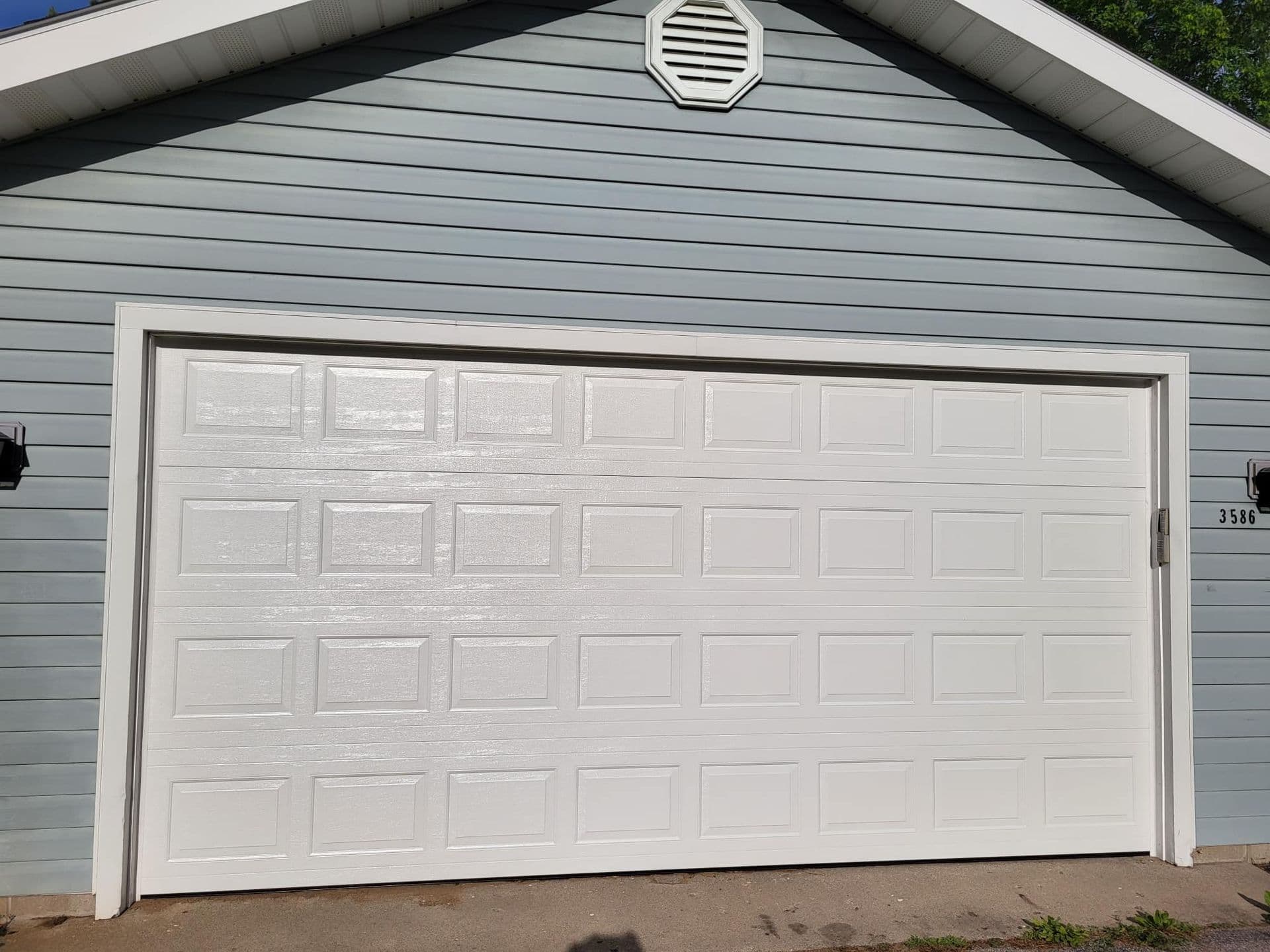
A garage door tune-up is a hands-on check of the whole system. A technician inspects the springs, cables, rollers, hinges, tracks and weather seals, lubricates the moving parts, tightens loose hardware, tests the balance and tests the opener's safety reverse. Most homes need one a year, and in Northern Michigan the best time is fall, before the first hard freeze.
Door getting louder or slower?
Call the office · Mon to Fri · 7:30 am to 4:00 pm · Free estimates
What does a garage door tune-up include
A garage door tune-up is a hands-on check of every part that lifts, guides, drives and seals the door, with lubrication, tightening and safety tests done on the same visit. It is an inspection first, so the most useful thing you get out of it is a plain report on what is worn before it breaks.
A garage door is a system. The springs lift it, the cables and drums carry the load, the rollers and tracks guide it and the opener drives it. When one piece wears, the others work harder, which is why our garage door maintenance visit looks at all of it together. This is what we cover.
- Springs checked for wear, gaps and lost tension.
- Cables and drums inspected for fraying and proper wrap.
- Rollers, hinges and bearings lubricated and checked for wear.
- Track alignment and mounting brackets checked.
- Loose hinge and track hardware tightened.
- Door balance tested with the opener disconnected.
- Opener travel limits and force settings checked.
- Photo-eye sensors and safety reverse tested.
- Bottom seal and perimeter weather stripping inspected.
What happens during a garage door tune-up visit
The technician works from the door to the opener: look, test the balance, lubricate, tighten, test the safety systems and then tell you what was found.
- 1A look at the parts that carry the loadThe springs are checked for wear, gaps and lost tension, and the cables and drums for fraying and proper wrap. These parts hold the weight of the door, so they come first.
- 2The balance testWith the opener disconnected, a properly balanced door feels light by hand and stays roughly in place when you let go of it halfway up. A door that drops or creeps up has springs that are out of adjustment or wearing out.
- 3LubricationRollers, hinges, bearings and springs get a light coat of lubricant made for garage doors. The tracks are wiped clean and left dry, because heavy grease collects grit and stiffens in the cold.
- 4HardwareA door shakes a little every time it runs, and hinge and track bolts work loose over the years. We snug them up and check the track alignment and the mounting brackets.
- 5The openerTravel limits and force settings are checked, so the door stops where it should at the top and at the floor without the opener straining.
- 6The safety testsThe photo-eye sensors and the safety reverse are both tested.
- 7The sealsThe bottom seal and the weather stripping around the sides and top are inspected for cracks, flat spots and gaps.
- 8The reportAt the end we tell you what we found, what we took care of and what is starting to wear, so nothing on the list comes as a surprise later.
Which garage door maintenance can you do yourself
You can safely do the looking, the listening, the two safety tests and light lubrication. Anything that involves the springs, the cables, the bottom brackets or the way the door is balanced belongs to a technician.
The manufacturers draw the same line. Chamberlain's maintenance schedule gives homeowners a monthly inspection and two monthly safety tests, and in the same article says never to loosen, move or adjust springs, cables, pulleys, brackets or related hardware, because they are under extreme tension. This chart sorts the common jobs.
| Task | How often | Who does it |
|---|---|---|
| Watch and listen while the door runs | Monthly | Homeowner |
| Safety reverse test with a 2x4 laid flat | Monthly | Homeowner |
| Photo-eye test | Monthly | Homeowner |
| Look at springs and cables from a distance | Monthly | Homeowner, eyes only |
| Wipe the photo-eye lenses and wipe the tracks clean | When they are dirty | Homeowner |
| Light lubricant on hinge pins and steel rollers | Every 3 to 6 months per Clopay | Homeowner or technician |
| Balance test | Before winter | Homeowner on a healthy closed door, or technician |
| Full inspection of springs, cables, drums and bearings | Yearly | Technician |
| Spring tension and balance adjustment | When the balance test fails | Technician only |
| Cable, drum and bottom bracket work | When worn or frayed | Technician only |
| Track realignment | When the door binds or rubs | Technician only |
| Opener travel and force settings | Yearly check | Technician |
What should you check on your garage door every month
Once a month, watch the door run, test the safety reverse with a 2x4 and test the photo eyes. The U.S. Consumer Product Safety Commission urges homeowners to inspect the garage door and the opener every 30 days, and DASMA, the door manufacturers' association, says its inspection checklist for homeowners can be worked through in about 15 minutes.
The only thing you need is a short piece of 2x4.
- 1Look the door overWith the door closed, look at the springs, cables, hinges and rollers from inside the garage without touching them. You are looking for a gap in a spring, a frayed cable, a cracked hinge or anything loose.
- 2Run it and listenOpen and close the door with the opener. Chamberlain says to listen for unusual noises and watch for sticking, jerking or uneven movement.
- 3Test the reverse with a 2x4Open the door fully and lay a 2x4 flat on the floor in the center of the door's path, which gives you a 1-1/2 inch object. Close the door with the opener. It should reverse after it touches the board.
- 4Test the photo eyesStart the door closing and pass an object through the beam near the floor while you stand clear of the door. The door should stop and go back up. DASMA's checklist says the beam should sit no higher than six inches above the floor.
- 5Wipe the lenses and the tracksClean the photo-eye lenses with a soft dry cloth, and wipe dirt out of the tracks with a damp cloth. Leave the tracks dry.
- 6Write down anything newA new noise, a jerk at one spot or a door that looks uneven on the way up is worth a note and a phone call.
How often does a garage door need a tune-up
Once a year is right for most homes. DASMA's safety guidance says that although homeowners should do monthly safety checks and maintenance, an annual visit from a trained door systems technician can keep the door operating safely and smoothly for a long time.
Doors that work harder need attention sooner. A busy family garage or a shop door that runs many times a day benefits from more frequent checks.
Lubrication runs on its own clock. Chamberlain's schedule calls for lubricating the rollers, bearings and hinges once a year. Clopay's lubrication guide suggests every 6 months for average use and every 3 months for a door that sees heavy daily use. Our guide to quieting a noisy garage door walks through the safe way to do it between visits.
When is the best time for a garage door tune-up in Northern Michigan
Fall, before the first hard freeze. Cold is when a marginal door stops being marginal: lubricants thicken, steel parts stiffen, openers work harder and seals freeze to the floor.
Springs are the part most worth catching early. Clopay's cold weather guide says broken springs happen more often in the colder months because spring wire becomes more brittle as the temperature drops. A tired spring found in October gets replaced on your schedule, not on a frozen morning with the car stuck inside.
Traverse City often sees more than 100 inches of lake-effect snow in a season, and wind off West Grand Traverse Bay and East Bay pushes it into any gap at the bottom seal. The attached two and three car garages in Garfield Township and East Bay Township go up and down several times a day, so their springs, rollers and openers wear first. The narrow detached garages in Slabtown and the Central Neighborhood carry older doors, many of them patched more than once.
In Acme, homes and condos along US-31 face open water and take wind straight off the East Arm of the bay, and a worn weatherstrip shows up quickly as drafts, snow on the garage floor and ice at the threshold. East along M-72, Williamsburg has cottages on Elk Lake and Lake Skegemog whose doors sit closed through the off season and can come back with stiff rollers or cracked seals, plus pole barns and detached shops across Whitewater Township. We cover all of Grand Traverse County from our office south of town.
Fall is also when everyone else thinks of it, so call the office early in the season.
What are the signs your garage door is overdue for a tune-up
A door that is louder, slower or rougher than it used to be is asking for service. Most doors give notice before something breaks, and these are the usual signs.
One sign is different from the rest. A door that feels heavy by hand, drifts down when you let go or sits crooked may have a spring or cable problem. That is a reason to stop using it and call, not to wait for a scheduled visit. Our garage door balance test shows the safe way to check.
- The door is louder than it used to be.
- It shakes, jerks or hesitates on the way up.
- The opener strains or slows down in cold weather.
- Light or snow shows under the bottom seal. Our guide to garage door bottom seals and weatherstripping explains what a worn seal lets in.
- The door feels heavy when you lift it by hand.
- It has been more than a year since anyone looked at it.
- You just bought the house and don't know the door's history.
What should a homeowner never do during garage door maintenance
Never adjust, loosen, wind or replace springs, cables, drums or bottom brackets, and never try to correct the balance yourself. Those parts hold the full weight of the door under tension.
DASMA's checklist is blunt about it. It says not to try to remove, repair or adjust springs or any door parts or mounting surfaces such as wood blocks, steel brackets or cables, and that all repairs and adjustments must be performed by a trained door systems technician using proper tools. Its safety guidance adds that the bottom brackets are connected to the springs and are under extreme tension.
The same goes for a balance problem. The CPSC warns that a severely unbalanced door could unexpectedly crash to the floor, and says doors that are not balanced, or that bind or stick, should be serviced by a professional. If a tune-up finds the springs out of adjustment, setting them is our job, and worn springs go to our garage door spring repair crew.
What happens when a tune-up finds a worn part
You hear about it plainly, with what needs attention now and what can wait, and you get a free estimate before any repair starts.
Finding wear is the point of the visit. A frayed cable, a cracked roller or a spring that has lost tension is far easier to deal with on a scheduled visit than on a morning when the door will not open. Every truck rolls out stocked, and most repairs are finished on the first visit.
Seals are a frequent find. After a few seasons of sun and cold, the bottom seal and the stop molding crack, flatten and pull away, and we replace them as part of maintenance or on their own. If you are shutting a seasonal place for the winter, our cottage garage door checklist covers the rest of the routine.
Sources
- 1.TDS 167: Residential Sectional Garage Door and Electric Operator Checklist for Home Inspectors and Consumers · DASMA (Door & Access Systems Manufacturers Association)
- 2.Garage Door Safety Tips · DASMA (Door & Access Systems Manufacturers Association)
- 3.Non-Reversing Automatic Garage Door Openers Are a Hazard (Publication 523) · U.S. Consumer Product Safety Commission
- 4.Garage Door Opener Recommended Maintenance · Chamberlain Group
- 5.How to Properly Lubricate Your Garage Door Components · Clopay
- 6.Fixing Garage Door Problems from Cold Weather · Clopay
Free estimate
Have our crew take a look
One short form and our office calls you back during business hours. Most repairs are finished on the first visit, and every truck rolls out stocked.
Or call the office(231) 360-5442Mon to Fri · 7:30 am to 4:00 pm · Closed weekends
Request service
About a minute. Our office calls you back.