Repair & Troubleshooting
What to do when your garage door spring breaks
· 11 min read · From the B&B Garage Doors office, Traverse City
When a garage door spring breaks, leave the door where it is, unplug the opener and keep people, pets and cars out from under it. Do not lift the door, run the opener or pull the emergency release on an open door. A broken spring is not a do-it-yourself repair, so call a garage door technician to replace it.
Spring just snapped?
Call the office · Mon to Fri · 7:30 am to 4:00 pm · Free estimates
What should you do first when a garage door spring breaks
Stop using the door, unplug the opener and keep everyone clear of it. DASMA, the door manufacturers' association, says in its garage door inspection checklist that if a spring is broken you should not operate the door until the spring is replaced.
None of these steps needs a tool.
- 1Stop pressing the buttonIf the opener hummed, strained or lifted the door a few inches and quit, don't try again. Every attempt asks the opener to lift weight the spring used to carry.
- 2Unplug the openerPull the plug so nobody runs the door from a remote, a keypad or the car out of habit. If the plug isn't within safe reach, switch off the breaker instead.
- 3Leave a closed door closedA door that is already down can't fall. Leave it there and use another door to get in and out of the house.
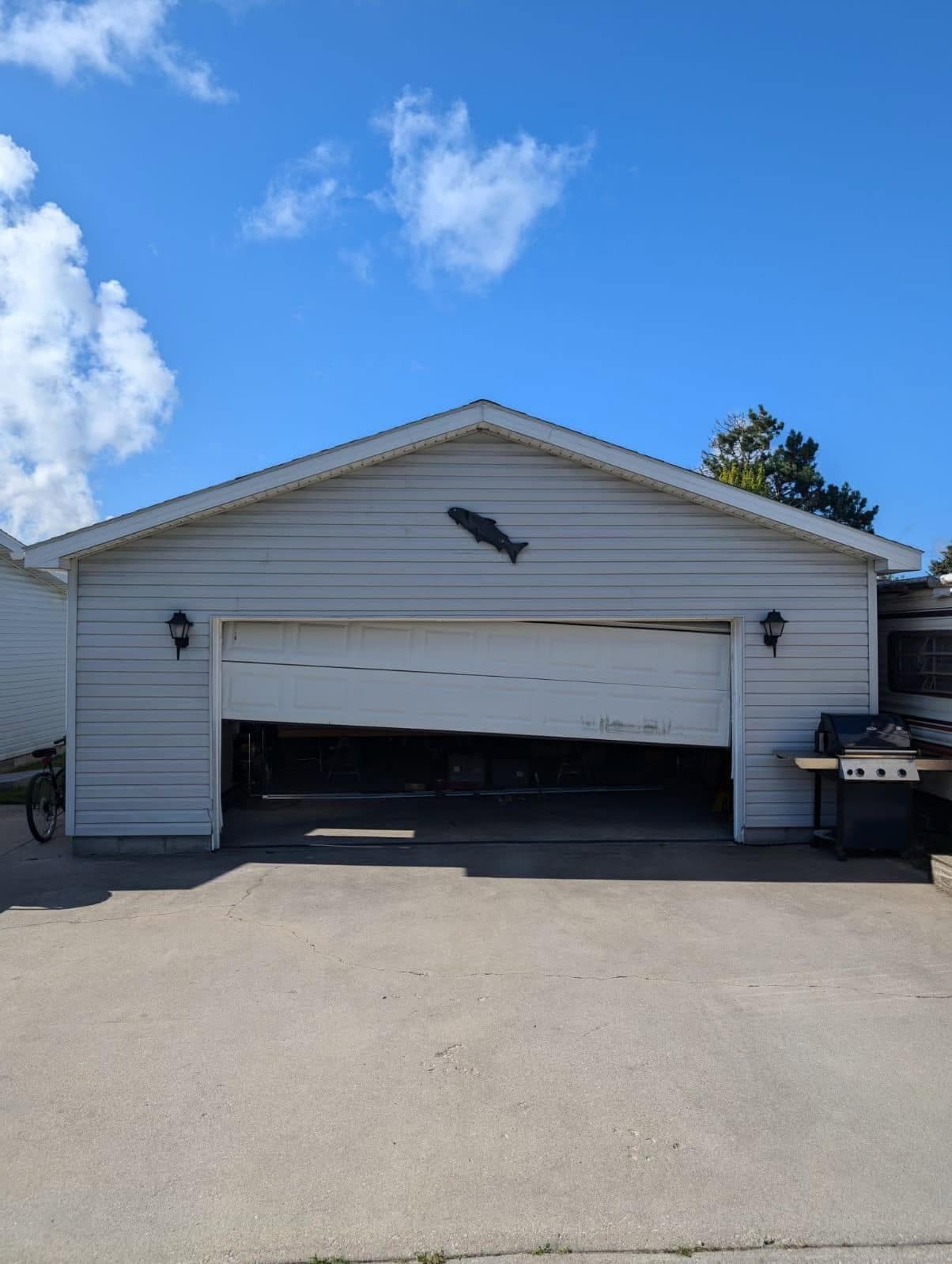
- 4Keep clear of an open doorIf the spring broke with the door up or partway up, keep people, pets and cars out from under it and do not pull the red release cord.
- 5Look without touchingFrom a few steps back, look at the springs, the cables at each bottom corner and both tracks. Don't touch the spring, the cables or the brackets at the bottom corners of the door.
- 6Call and describe what you seeTell the office whether the door is up or down, whether the springs sit above the door or along the ceiling tracks and whether a car is inside.
How do you know a garage door spring is broken
The usual signs are a loud bang from the garage, a visible gap in the spring and a door that is suddenly very heavy. Clopay notes that you may be able to see the long coil above the door split into two pieces, and that a popping noise the last time the door ran may have been the spring breaking.
The bang often happens when nobody is near the door, so many people find out later, when the opener hums and nothing moves. Chamberlain's troubleshooting chart lists broken springs as a cause when an opener gives a brief hum and the door stays put. Match what you see in this chart.
| What you notice | What it usually means | What to do |
|---|---|---|
| A loud bang from the garage | A spring has snapped | Look for a gap in the coil above the door |
| A gap in the coil above the door | Broken torsion spring | Leave the door down and call |
| A spring along the ceiling track hanging loose or stretched out | Broken extension spring | Keep clear and call |
| Opener hums briefly and the door stays put | The opener can't move the door without the spring | Unplug the opener |
| Door lifts a few inches then stops | The opener is straining against the door's full weight | Stop pressing the button |
| Door rises crooked or jerks | One spring has failed or a cable has come loose | Stop and keep everyone clear |
Why is the garage door so heavy when the spring breaks
Because the springs carry the weight of the door, not the opener. Clopay's spring system guide explains that the springs are loaded with energy when the door is closed and pass it through the cables to pull the door up, so a balanced door lifts with minimal effort and the opener motor doesn't have to strain.
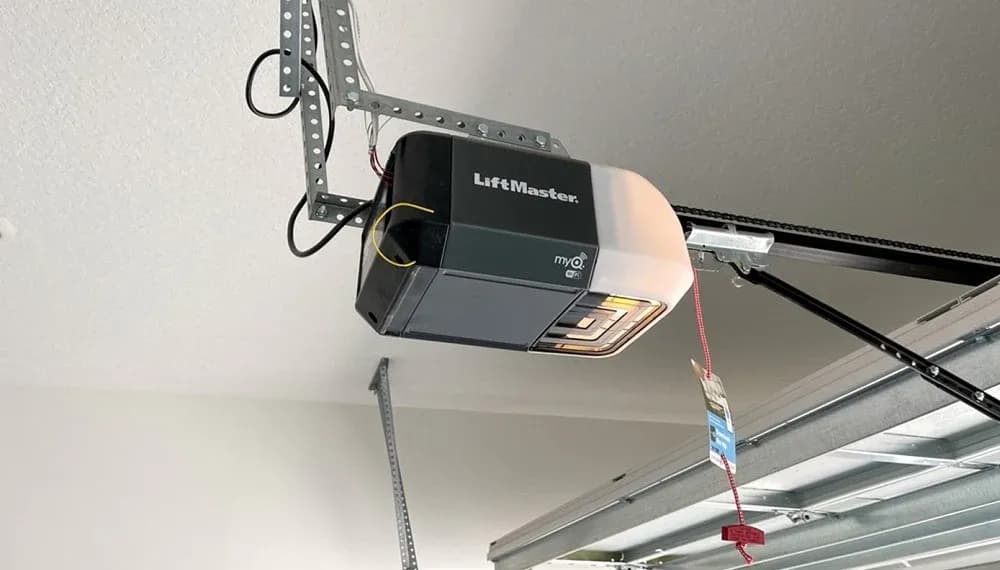
When a spring breaks, that help is gone and the door is dead weight. The opener was only ever meant to move a balanced door. Asking it to do the springs' job wears out gears and motors, and without the spring the door can burn out the opener, snap a cable or drop.
What should you never do with a broken garage door spring
Never run the opener, lift the door by hand, pull the emergency release on an open door or try to fix the spring yourself. Each of those can drop the door or let stored spring tension go all at once.
- Don't keep running the opener. It strains against the full weight of the door and can damage the opener, the cables or the top section where the opener arm attaches.
- Don't pull the red emergency release while the door is open or partway open. Chamberlain says to use the release only when the door is fully closed if possible, because a door with weak or broken springs may fall.
- Don't lift the door by hand or prop it up to squeeze a car out. A door with a broken spring is not something to hold up with your arms, a ladder or a board.
- Don't loosen any bolt on the springs, the shaft above the door or the bottom brackets. DASMA notes that the bottom brackets are connected to the springs and are under extreme tension.
- Don't touch a cable that hangs slack or has come off its drum. Our guide on what a snapped or loose garage door cable means explains why.
What is the difference between torsion and extension springs
Torsion springs mount on a shaft above the door and twist to lift it, and extension springs run alongside the horizontal tracks and stretch as the door closes. Both counterbalance the weight of the door, both hold dangerous tension and both wear out.
- Extension springs need safety cables. DASMA says a door with extension springs needs a cable that runs through each spring and is secured at both ends, so a spring that breaks stays contained. If yours don't have them, we can add them.
- Either type is a job for a technician. Our garage door spring repair crew replaces both torsion and extension springs.
| Torsion spring | Extension spring | |
|---|---|---|
| Where it sits | On a metal shaft above the door | Beside the horizontal track on each side |
| How it works | Winds up as the door closes and unwinds to lift it | Stretches as the door closes and contracts to lift it |
| How a break looks | A gap in the coil | A spring that hangs loose or looks stretched out |
| What contains a break | The shaft through the middle of the spring | A safety cable run through the spring |
| Where Clopay says it is common | Modern and heavier doors | Lighter doors and garages with limited headroom |
Can you open a garage door with a broken spring
It's best not to. A closed door with a broken spring should stay closed until the spring is replaced, and an open one should be left alone with everyone kept clear.
The manufacturers agree on this. Clopay's advice is that if a door feels like it weighs a ton or won't budge by hand, a spring may be broken and the repair must be handled by a professional. Chamberlain's manual release instructions say not to proceed if springs, cables or rollers appear damaged, and to stop immediately if the door feels unusually heavy, will not stay open or slams shut.
Our guide to opening a garage door manually walks through the release cord for a power outage, when the door itself is healthy. A broken spring is the one case where those steps do not apply.
If your car is trapped inside, the honest answer is that it should stay there until the spring is replaced. Our office is open Monday to Friday, 7:30 am to 4:00 pm, and we don't run evening or weekend service, so line up another ride if the spring lets go after hours. When you call, tell us the car is inside and whether the door is up or down.
How long do garage door springs last
Springs wear out by cycles, not by years. Clopay says garage door springs are usually rated for 10,000 cycles, with one cycle being an open and a close, and that the average garage door opens and closes about 1,500 times a year.
That is why two neighbors with the same door can get very different spring life. A door that runs many times a day uses up its cycles far sooner than a cottage door that opens on summer weekends. Clopay recommends replacing springs that have never been changed if you have lived in the home for 7 years or longer and use the door daily.
A spring often gives some warning before it breaks. The door starts to feel heavier, drifts down when you let go of it halfway or makes the opener work harder. Our garage door balance test shows the safe way to check, and DASMA advises having the springs on an older door inspected by a professional technician. A spring check is part of every garage door tune-up we do.
Why do garage door springs break in cold weather
Cold makes spring wire more brittle. Clopay's cold weather guide says broken springs happen more often in the colder months because spring wire becomes more brittle and weakens as the temperature drops.
Wear still does most of the work. A spring near the end of its life is the one that gives out, and the cold decides which morning. Clopay also notes that lubricant can harden and get gunky as the temperature falls, which makes the whole door harder to move.
What makes a Northern Michigan winter hard on garage door springs
Long cold stretches, deep snow and doors that work every day. Traverse City often sees more than 100 inches of lake-effect snow in a season, and the inland towns away from the bay run colder at night than the shore does.
In town, the attached two and three car garages in Garfield Township and East Bay Township go up and down several times a day, and torsion springs are among the first parts to wear on those doors. We handle garage door repair in Traverse City from an office just south of town.
Inland, the cold bites harder. Kingsley sits out M-113 in Paradise Township, away from the milder air along the bay, and Interlochen sits between Green Lake and Duck Lake, where a door that moved easily in October can drag in January.
Around Grawn, where US-31 meets Silver Lake Road, many properties have a pole barn out back with a wide or tall door. Those doors break springs the same way house doors do. Our shop is in the same township, near Chums Corner, and we cover the rest of Grand Traverse County from there.
What happens during a garage door spring replacement visit
A technician confirms what broke, replaces the springs with ones matched to your door and checks that the door balances and runs safely before leaving. You get a free quote before any work starts.
- 1We look at the whole doorThe springs get the attention, but a door that ran on a failing spring deserves a wider look, so we check the cables, rollers, bearings and tracks too.
- 2You get a free quoteWhat the job involves depends on the type and size of spring your door needs, whether one or both are replaced and whether parts like cables or bearings are worn.
- 3The springs are matched to your doorSprings are sized to the door they lift. We fit precision-matched springs, bearings included, so the door is counterbalanced the way it was designed to be.
- 4The door is balanced and testedA properly balanced door feels light by hand and stays roughly in place when you let go of it halfway up. We check that, then run the opener and test its safety reverse.
- 5You hear what else we foundIf a cable is fraying or a roller is worn, we tell you plainly what needs attention now and what can wait.
Sources
- 1.Garage Door Safety Tips · DASMA (Door & Access Systems Manufacturers Association)
- 2.TDS 167: Residential Sectional Garage Door and Electric Operator Checklist for Home Inspectors and Consumers · DASMA (Door & Access Systems Manufacturers Association)
- 3.Garage Door Spring Systems: A Buying Guide for Homeowners · Clopay
- 4.Fixing Garage Door Problems from Cold Weather · Clopay
- 5.How to Manually Open or Close a Garage Door · Chamberlain Group
- 6.Why does my garage door opener hum but the door does not move · Chamberlain Group
Free estimate
Have our crew take a look
One short form and our office calls you back during business hours. Most repairs are finished on the first visit, and every truck rolls out stocked.
Or call the office(231) 360-5442Mon to Fri · 7:30 am to 4:00 pm · Closed weekends
Request service
About a minute. Our office calls you back.