Repair & Troubleshooting
What a snapped or loose garage door cable means
· 11 min read · From the B&B Garage Doors office, Traverse City
A snapped or loose garage door cable means the door has lost part of its connection to the springs that carry its weight, so it is out of balance and can drop, hang crooked or jump the track. Stop using the door, unplug the opener, keep everyone out from under it and have a technician replace the cables.
Cable hanging loose right now?
Call the office · Mon to Fri · 7:30 am to 4:00 pm · Free estimates
What does it mean when a garage door cable snaps
It means one side of the door is no longer properly connected to the springs that carry its weight, so the door is out of balance and unsafe to run. The springs do the lifting on a garage door, and the cables are how that lifting force reaches the bottom of the door on each side.
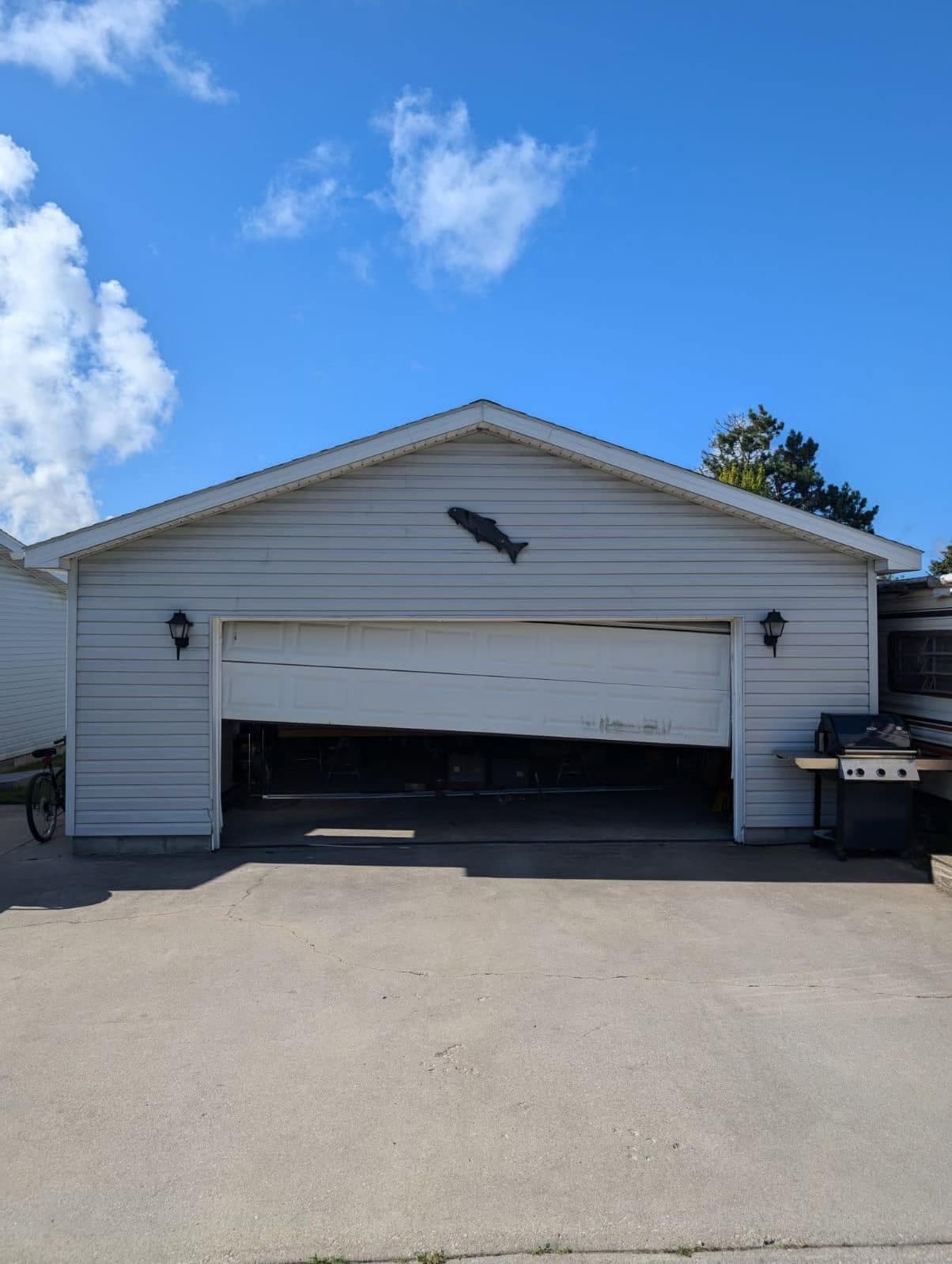
With one cable broken or slack, the springs pull on one side only. The door can hang crooked, bind in the track, come down harder than it should or jump out of the track altogether. The CPSC warns that a severely unbalanced garage door could unexpectedly crash to the floor, and that doors which are out of balance, binding or sticking should be serviced by a professional.
A loose cable is not a smaller problem. A cable that has slipped off its drum or gone slack is one bad cycle away from the same failure, so treat it the same way.
What do garage door cables do on torsion and extension springs
On both systems the lift cables run from the bottom brackets of the door to the springs, but the path is different. Knowing which one you have helps you describe the problem when you call.
On a torsion system, the spring sits on a steel shaft above the door. The door industry's trade group, DASMA, defines the cable drum as a grooved drum on that shaft that the lifting cable winds onto as the door opens. There is one drum at each end. If a cable breaks or unwinds off its drum, you will often see it hanging loose near a top corner of the door.
On an extension system, a long spring runs above each horizontal track. The lift cable runs from the bottom bracket up through pulleys connected to the spring, so the spring stretches as the door closes and pulls as it opens. These doors should also have a separate safety cable, also called a containment cable, threaded through the middle of each spring. It does not lift anything. Its job is to hold the spring if the spring breaks instead of letting it fly across the garage.
Either way, cables and springs work as one system. Our torsion and extension spring repair page explains the spring side of it.
How can you tell if a garage door cable is broken or loose
The most common signs are a door that sits crooked, a cable hanging loose on one side and a loud bang followed by a door that will not open properly. Some signs show up with the door closed and some only when it moves, so use the table below and look without touching.
- A broken spring often leaves the cables slack, and slack cables can slip off their drums, so one failure can look like the other.
- If the door has tilted and a roller is out of the track, read what to do when a garage door comes off its track before anything else.
| What you notice | Likely cause | Safe to check yourself? | Call us? |
|---|---|---|---|
| Door sits lower on one side | One cable broken or slack | Look only | Yes, stop using it |
| Cable hanging loose near the top | Cable off the drum or snapped | Look only | Yes, stop using it |
| Loud bang from the garage | Broken spring or cable | Look from the doorway | Yes |
| Door jerks or jumps the track | Uneven cable tension | No | Yes, stop using it |
| Frayed or rusty strands at a bottom corner | Cable wearing out | Look only | Yes, before it breaks |
| Opener strains and door barely lifts | Spring or cable failure | No | Yes, unplug the opener |
What should you do right now if a garage door cable snaps
Stop using the door and leave it where it is. The steps below are the safe ones, and none of them involve touching the cables, springs or brackets.
- 1Stop the doorIf the door is moving, let it stop. Do not press the button again to see what happens.
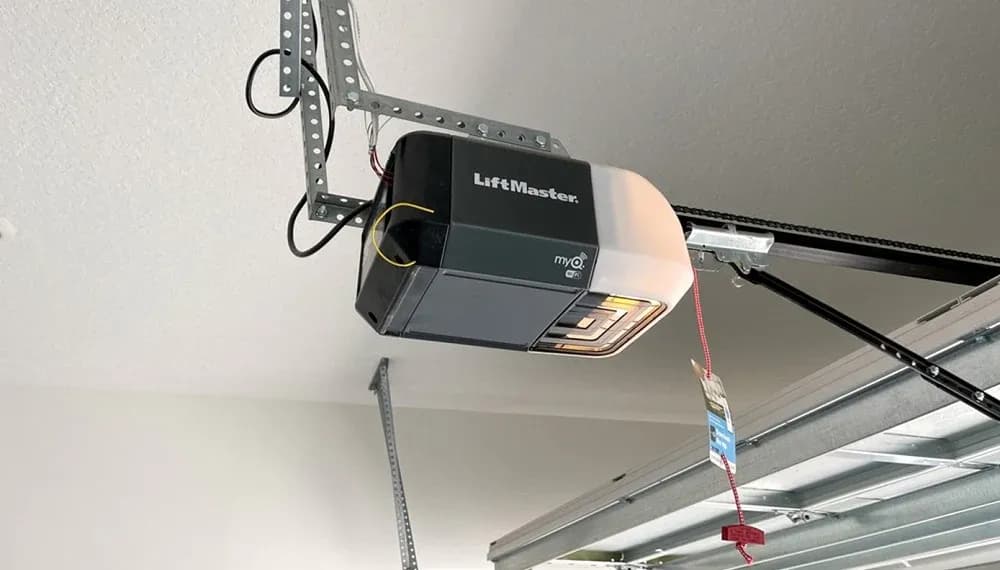
- 2Unplug the openerPull the opener's plug so nobody can run the door from a remote, keypad or car. An opener can lift a door with a broken cable just far enough to twist it out of the track.
- 3Keep everyone out from under itKeep kids and pets out of the garage, and never walk or park under a door that is partly open with a cable down.
- 4Do not pull the emergency releaseIf the door is open or partly open, releasing it from the opener can let it fall. Chamberlain advises using the release only when the door is fully closed, if possible.
- 5Move the car only if it is clearIf the door is fully open, stopped and nowhere near the car, back out slowly. If the door is down or hanging low, leave the car where it is.
- 6Take photos and callA photo of each bottom corner and each top corner of the door helps us bring the right parts. Then call the office.
Why do garage door cables break or come off the drum
Most cables fail from wear, rust or a problem elsewhere in the system that puts them under uneven tension. They are braided steel, but they work under load every time the door moves.
- Fraying: individual strands wear and break, usually near the bottom bracket or where the cable rubs a pulley or the door.
- Rust: salt, slush and damp garages corrode the strands, often at the bottom corners where water sits.
- A broken spring: when a spring fails, the cables can go slack and slip off the drums.
- A door that binds or catches: if one side stops while the drum keeps unwinding, that cable goes slack and can jump its drum.
- A door off track or hit by a car: a door out of line pulls unevenly on the cables. Our guide for when you have backed into your garage door covers that situation.
- Worn drums, pulleys or brackets: a rusted bracket, a loose drum or a seized pulley can chew through a cable or let it slip.
- Northern Michigan winters: road salt and slush ride in on the car all season, and pole barns and detached garages that stay damp and unheated are hard on bare steel. Whether the door is on a house in town or a pole barn out past Kingsley, rusty strands at the bottom corners are worth having checked before the snow flies.
Is a snapped garage door cable an emergency
It is a stop-using-the-door problem right away, but how urgent the repair is depends on where the door ended up. A door that is down, closed and sitting level is safe to leave alone until it is repaired, as long as nobody tries to open it.
A door stuck open or hanging partway is more pressing. The garage is open to weather and passersby, and a partly open door with one cable down is the most likely to shift or drop. Keep people and cars out from under it and do not try to force it closed.
Our office is open Monday to Friday, 7:30 am to 4:00 pm, and our crew covers Traverse City and the surrounding counties. If a cable goes on a weekend, leave the door where it is, keep the opener unplugged and call when the office opens.
Why replacing a garage door cable is not a DIY job
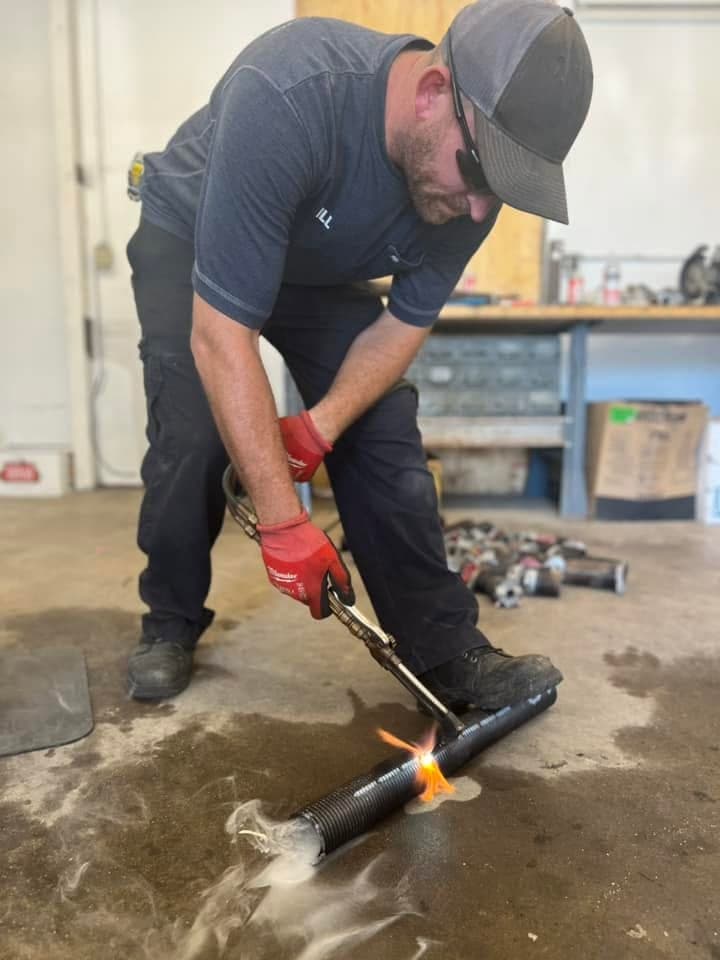
Because the cable is part of the counterbalance system, and working on it means dealing with spring tension that can injure you badly if it is released the wrong way. On a torsion door the spring has to be unwound before a cable can be safely replaced, and on any door the bottom brackets are under tension while the springs are loaded.
DASMA's homeowner safety tips say worn or frayed cables should only be replaced by trained technicians. Clopay's service and replacement guide gives the same advice, noting that frayed cables are in danger of breaking and could cause serious injury or property damage. Online videos can make the job look simple, but they rarely show what happens when an unbalanced door shifts or a loaded bracket slips.
There is also the door itself. A garage door is heavy, and with one cable gone it is no longer held evenly. Lifting it by hand, propping it on a ladder or letting the opener drag it up can drop it or twist it out of the track.
What happens during a garage door cable repair
A cable repair means securing the door, taking the load off the springs, replacing the cables and then checking and rebalancing the whole system. Here is what a technician typically does.
- Secures the door so it cannot move while the system is unloaded
- Unwinds the torsion spring or takes the load off the extension springs
- Replaces the lift cables, usually both sides together so the door lifts evenly
- Inspects the drums, bottom brackets, pulleys, rollers and hinges and replaces anything worn or bent
- Resets the door in its tracks if it came out
- Rewinds or reconnects the springs and sets the door's balance
- Runs the door by hand and with the opener, including the opener's safety reverse
Should you replace both garage door cables and the springs too
Replacing both lift cables together is common practice in the trade, and the springs get replaced too when a broken spring is what took the cable out. Both cables have seen the same years of use, and a new cable beside a worn one can leave the door lifting unevenly.
Springs follow the same logic. DASMA's advice is that when a door has two springs, both should be replaced even if only one is broken. Our garage door repair crew handles cables, drums, brackets and doors knocked off track, so the cables, springs and the rest of the system get looked at together.
How to inspect garage door cables safely
You can check your cables yourself as long as you only look. DASMA recommends a visual inspection of the cables that run to the bottom brackets on both sides of the door, and the CPSC suggests inspecting the garage door and opener every 30 days.
- With the door closed, look at each bottom corner for broken strands, kinks, bulges or rust.
- With the door fully open and stopped, look up at the drums from off to the side, never from under the door, to see that each cable sits in its grooves.
- Watch the door run. It should move smoothly and stay level from side to side.
- Listen for new scraping, snapping or grinding.
- A couple of times a year, do the garage door balance test, which shows whether the springs and cables are still holding the door evenly.
- Once a year, book a garage door tune-up so someone who can safely take the tension off checks the cables, drums and brackets up close.
Sources
- 1.Non-Reversing Automatic Garage Door Openers Are a Hazard (Publication 523) · U.S. Consumer Product Safety Commission
- 2.Garage Door Safety Tips · Door & Access Systems Manufacturers Association (DASMA)
- 3.TDS 160: Sectional Garage Door Terminology · Door & Access Systems Manufacturers Association (DASMA)
- 4.Garage Door Replacement Parts Guide · Clopay
- 5.How to Manually Open or Close a Garage Door · Chamberlain Group
Free estimate
Have our crew take a look
Three quick steps and our office calls you back during business hours. Most repairs are finished on the first visit, and every truck rolls out stocked.
Or call the office(231) 360-5442Mon to Fri · 7:30 am to 4:00 pm · Closed weekends
Request service
About a minute. Our office calls you back.
Step 1 of 3
- Your property
- What's going on
- Where we call you