Repair & Troubleshooting
Backed into your garage door and what to do next
· 12 min read · From the B&B Garage Doors office, Traverse City
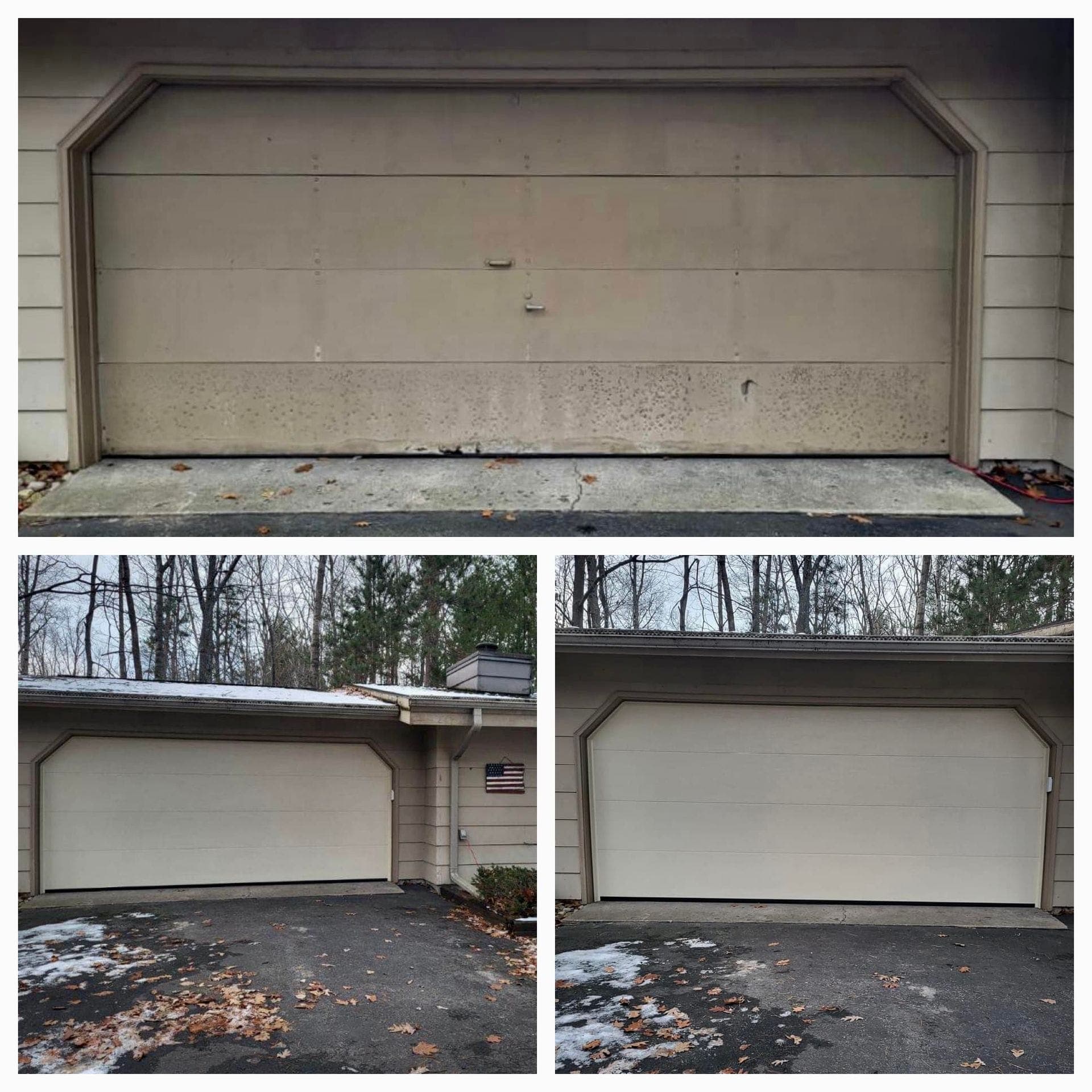
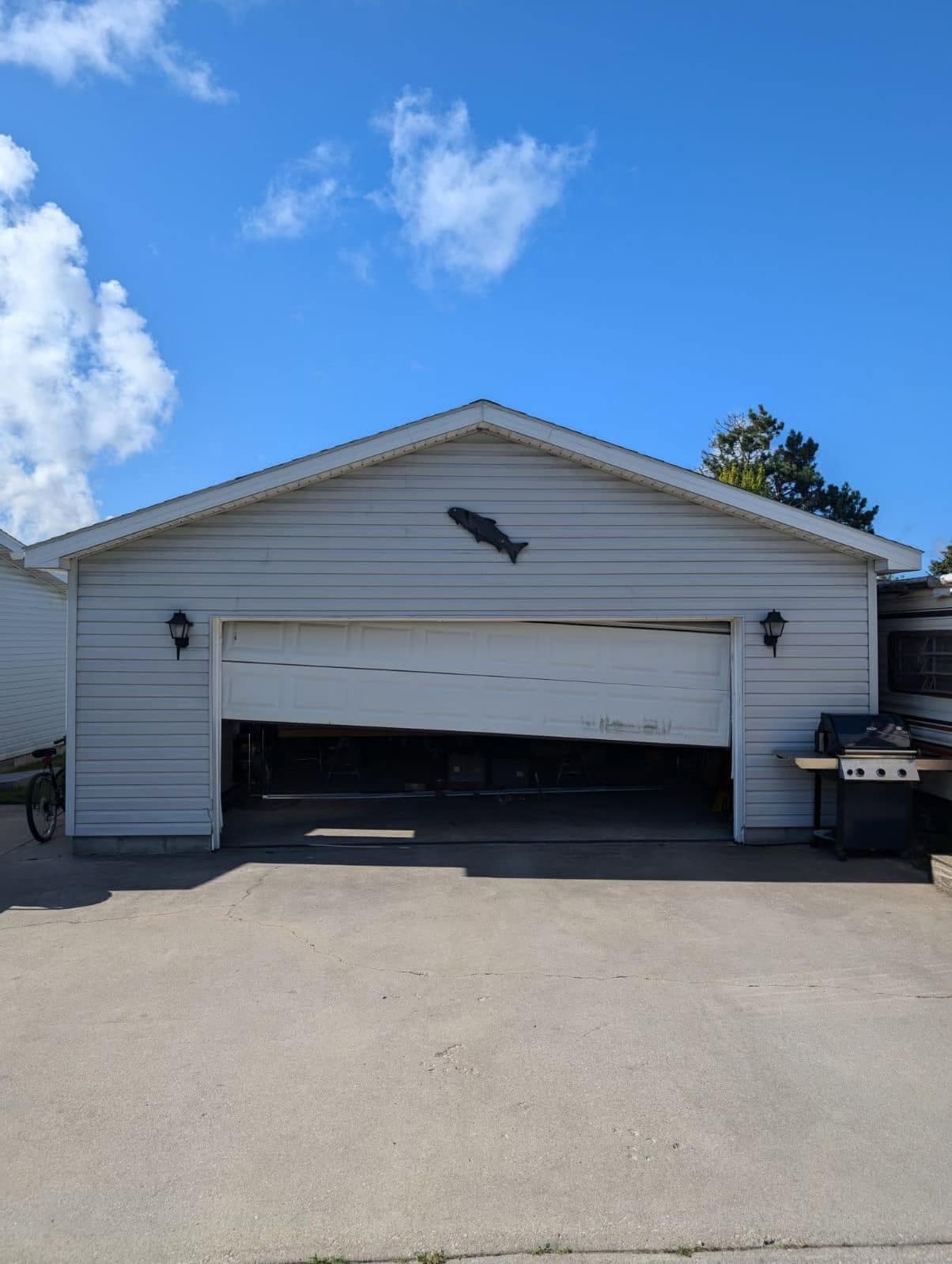
If you backed into your garage door, stop using it. Unplug the opener, leave the door where it is, keep people out from under it and photograph the damage before anything moves. A hit can knock rollers out of the track and put cables and springs under uneven tension, so let a technician free and repair it.
Just backed into your garage door?
Call the office · Mon to Fri · 7:30 am to 4:00 pm · Free estimates
What should you do right after backing into your garage door
Take the door out of service before you do anything else. The impact may have bent a section, popped rollers out of the track or loosened a lift cable, and the door is still hanging on springs under heavy tension. The steps below keep a bad morning from turning into an injury.
Work through them in order. None of them require touching a spring, a cable or a bracket.
- 1Stop the car and the doorIf the door is moving, let it stop on its own. Put the car in park and turn it off.
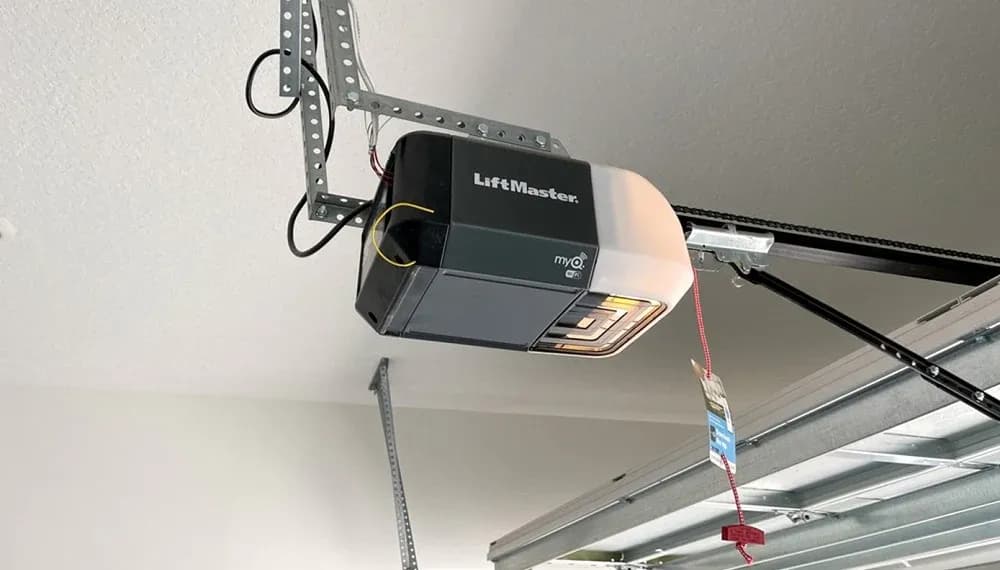
- 2Unplug the openerPull the opener's plug from the ceiling outlet so nobody can run the door from a remote, keypad or car button. An opener driving a bent or off-track door can make the damage much worse.
- 3Keep everyone clearKeep kids, pets and visitors out of the doorway and out of the garage. A damaged door can shift or drop without warning, so never stand or walk under it.
- 4Leave the door where it isDo not push a bent section back into place, pull the emergency release or force the door open or closed. A door hanging crooked or out of its track needs to be secured with the right tools.
- 5Photograph everythingTake photos of the door, the tracks, the cables and the car before anything is moved. The list further down covers what to capture.
- 6Call your agent and a garage door companyYour insurance agent can tell you what your policy covers. A garage door technician can tell you what the door needs and give you a written estimate.
Is it safe to use a garage door after you hit it
No, not until someone has checked it. Even a small dent can mean the bottom of the door was pushed out of line, a roller was sprung from the track or a lift cable went slack, and the next open or close is when those problems turn into a door that jams, racks sideways or comes down hard.
Garage doors are heavy, and the springs carry most of that weight. Chamberlain, the company behind LiftMaster openers, tells homeowners in its manual release instructions to stop and call a professional if a door feels unusually heavy, will not stay open or slams shut, and to use the emergency release only when the door is fully closed if possible. A door that has just been hit by a car deserves the same caution.
The opener is the other risk. It will keep pushing or pulling against a door that is binding, which can bend more sections, strain the opener or drag the door further out of the track. That is why unplugging it comes second on the list.
Can I get my car out after backing into the garage door
Often yes, but only if the car can come out without touching the door. If the door is fully open, stopped and clear of the car, back out slowly and park somewhere else.
If any part of the door is resting on the car, caught on the bumper or hanging low over the roof, leave the car where it is. The car may be what is holding a bent or off-track door up, and moving it can let the door drop or twist further out of the track. The same goes for a door stuck closed with the car inside. Do not force it up to get the car out.
In those cases the door has to be secured before the car moves. A technician can support the door, take the load off safely and then free the car. Our guide to a garage door that comes off its track explains why a door out of its track is so unpredictable.
What should you photograph after hitting your garage door
Photograph the whole scene before anything is moved or repaired, because once the car is moved or a track is straightened you cannot recreate it. Good photos help your insurance agent, help us quote the right parts and give you a record if questions come up later.
- A wide shot of the whole door from outside and from inside the garage
- Close-ups of every dented, cracked or bowed section
- Both vertical tracks, especially any bends or rollers sitting outside the track
- The cables at the bottom corners and at the top, from a spot that is not under the door
- The opener, its rail and the arm that connects it to the door
- The car, including the bumper and the spot where it made contact
- Any maker's label or sticker on the inside of the door, which helps identify the model for replacement sections
Does insurance cover backing into your own garage door
It might, but it depends on your policy, your deductible and how your insurer treats damage you cause to your own home with your own car, so your first call should be to your insurance agent. We are a garage door company, not an insurance company, and we cannot tell you whether a claim will be paid.
Here is the general picture so you know what to ask. The Insurance Information Institute explains that a homeowners policy pays to repair the home when it is damaged by the events listed in the policy, and that most policies also cover detached structures such as a garage. Damage to the car is a separate matter, usually handled under the collision coverage on your auto policy if you carry it.
Michigan adds a wrinkle. Every no-fault auto policy here includes Property Protection Insurance, which Michigan DIFS describes as paying for damage your car does in Michigan to other people's property, such as buildings and fences. Your own garage is not other people's property, so ask your agent which policy, if any, applies. If you rent, or it was a guest's car, the answer may be different again.
- Is damage to my garage door covered when I cause it with my own car?
- Would it fall under my homeowners policy, my auto policy or neither?
- What is my deductible, and does a claim make sense for damage this size?
- Do you need photos, a written estimate or an adjuster's visit before repairs start?
What gets damaged when a car hits a garage door
Usually the bottom one or two sections take the hit, but the damage rarely stops there. The force travels into the rollers, hinges, tracks and the bottom brackets where the lift cables attach, which is why a door with one visible dent can still be unsafe to run.
| What you see | What it usually means | Safe to run the door? | What to do |
|---|---|---|---|
| One shallow dent, door runs level | Cosmetic section damage | Have it checked first | Photograph it and get an estimate |
| Section bowed or cracked | Section likely needs replacing | No | Unplug the opener and call |
| Roller outside the track | Door is partly off track | No | Leave it where it sits |
| Bent or twisted track | Track needs repair or replacing | No | Keep clear and call |
| Cable loose or hanging | Cable slack, off the drum or snapped | No | Stay out from under it |
| Door hangs crooked | Uneven cable or spring tension | No | Keep everyone clear |
| Opener arm bent or rail pulled down | Opener hardware damage | No | Unplug the opener |
Can you replace one garage door panel or does the whole door need replacing
A single damaged section can often be replaced on its own, as long as a matching section is still available for your door. Garage doors are built from horizontal sections, and manufacturers sell replacement sections for many models through their dealers.
Matching is the hard part. Clopay, one of the larger door makers, notes that ordering a replacement section takes the door's model, the section size, the color and which section is needed, and that when a door is over 15 years old and sections are no longer available, a full replacement may make more sense. Paint and finish also age, so a new section may not look identical to the ones beside it.
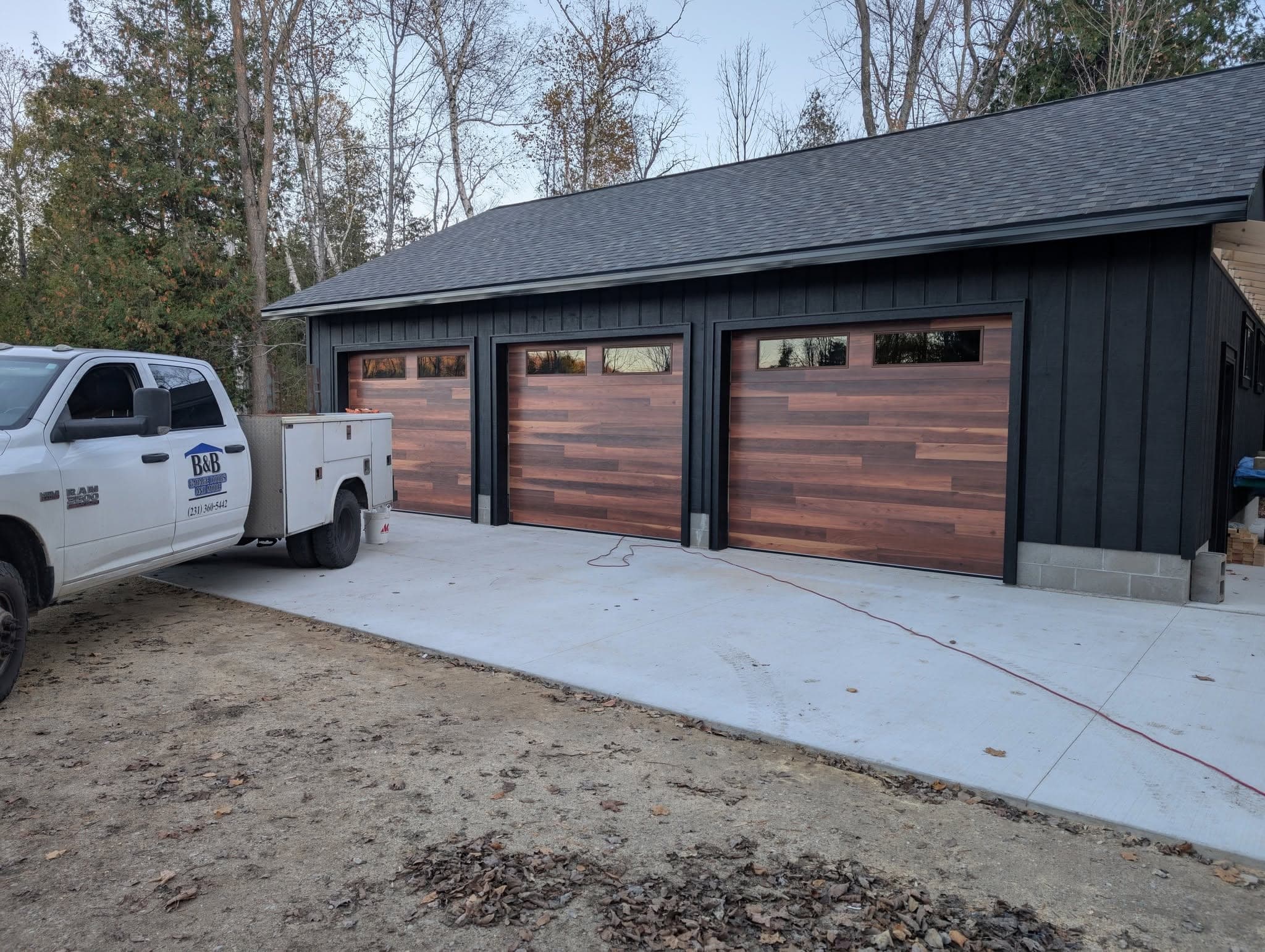
When more than one or two sections are damaged, when the door was already worn or when the sections simply are not made anymore, a new door is usually the better value. Our garage door repair crew handles sections, tracks, rollers, hinges, cables and doors hit by a car, and if a spring was damaged too, our spring repair page covers that work. If you land on a new door, the Northern Michigan buyer's guide to a new garage door walks through the choices, and we install new garage doors from Haas Door, Richards-Wilcox and other makers.
How long can a damaged garage door wait for repair
A door that still closes, locks and runs level with a cosmetic dent can usually wait a short while, but a door that is off track, hanging crooked or showing a loose cable should not be used at all until it is fixed. The real question is less about the dent and more about whether the door is safe, secure and closed.
Be wary of a door that still works. A bent bottom section or a roller riding the edge of the track can run for a while and then jam or jump the track on a cold morning. If the door makes new noises, stutters or leaves a gap at the floor since the hit, stop using it. Our article on a snapped or loose garage door cable covers the warning signs to watch for.
Security matters too. If the door cannot be closed and locked, everything in the garage, and often the entry door into your house, is exposed. Most repairs are finished on the first visit, and if a replacement section has to be ordered, ask about getting the door secured and closed in the meantime.
Why a damaged garage door is harder to live with in a Northern Michigan winter
In winter a door that will not close fills the garage with cold air, snow and slush. Traverse City often sees more than 100 inches of lake-effect snow in a season, and a door stuck open or leaving a gap at the bottom lets drifts blow straight in.
Cold also makes small problems bigger. Sections, rollers and tracks that were knocked out of line bind more in the cold, grease stiffens and the opener works harder, so a door that limped along in October can quit on a January morning. With an attached garage, that cold sits right against the door into your house and everything stored in the garage.
Our crew works out of the office south of Traverse City off US-31 and covers Grand Traverse, Leelanau, Benzie, Antrim and Kalkaska counties. You can see the towns on our service area page, or contact the office to set up a visit.
How to avoid backing into your garage door again
A few habits prevent most repeat hits. None of them cost anything, and the last two are worth checking during any repair visit.
- Wait until the door has stopped at the top before you put the car in reverse.
- Close the door only after the car is fully clear of the opening.
- Use your backup camera and mirrors, and add a simple parking aid if the fit is tight.
- If the door no longer opens as high as it used to, have the opener's travel settings checked.
- Keep the photo-eye safety sensors clean and aimed so a closing door reverses if something is in the way.
Sources
- 1.How to Manually Open or Close a Garage Door · Chamberlain Group
- 2.Garage Door Safety Tips · Door & Access Systems Manufacturers Association (DASMA)
- 3.What is covered by standard homeowners insurance? · Insurance Information Institute (Triple-I)
- 4.Michigan No-Fault Insurance Quick Facts (FIS-PUB 0202A) · Michigan Department of Insurance and Financial Services
- 5.Can I Replace My Garage Door Panels? · Clopay
Free estimate
Have our crew take a look
Three quick steps and our office calls you back during business hours. Most repairs are finished on the first visit, and every truck rolls out stocked.
Or call the office(231) 360-5442Mon to Fri · 7:30 am to 4:00 pm · Closed weekends
Request service
About a minute. Our office calls you back.
Step 1 of 3
- Your property
- What's going on
- Where we call you