Repair & Troubleshooting
Why your garage door won't close and how to fix it
· 12 min read · From the B&B Garage Doors office, Traverse City
When a garage door won't close, check the photo-eye safety sensors first: a blocked beam, a dirty lens, a bumped sensor or bright sun will send the door back up. If the sensors check out, look at ice at the threshold, the travel setting and binding in the tracks. A door that feels heavy or hangs crooked needs a technician.
Door stuck open right now?
Call the office · Mon to Fri · 7:30 am to 4:00 pm · Free estimates
What should you check first when your garage door won't close
Start with the safety sensors, then the path of the door, then the opener settings and finally the springs and cables. Chamberlain, the company behind LiftMaster, calls misaligned sensors a common cause of a door that won't close, and they are safe and easy to check yourself.
Watch what the door does. Whether it won't start down, reverses partway, bounces off the floor or stops short points to a different cause.
- 1Clear the doorwayMove bins, bikes, boots, shovels and anything else out of the door's path and away from the two sensors near the floor.
- 2Look at the sensor lightsEach photo eye has a small light. On LiftMaster and Chamberlain openers the sending eye glows amber and the receiving eye glows green, and both should be steady, not off or flickering.
- 3Wipe both lensesClean dust, cobwebs and road spray off each lens with a soft dry cloth.
- 4Check the aimIf a light flickers or is off, loosen the wing nut, point that sensor straight at its partner until the light holds steady and tighten the nut again.
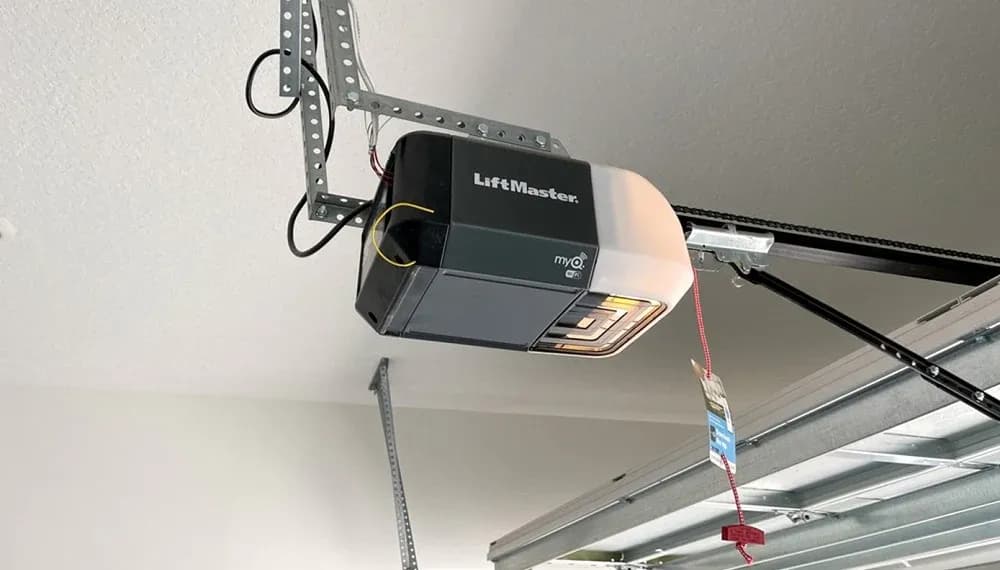
- 5Count the opener flashesChamberlain says the opener's main lights flash 10 times when there is a safety sensor problem. Count them before you call so we know where to start.
- 6Look at the springs and cables from a distanceIf a spring above the door has a gap or a cable hangs loose at a bottom corner, stop troubleshooting and leave the door alone.
What your garage door is telling you when it won't close
The way the door fails narrows down the cause quickly. Match what you see in this chart, then read the section that fits.
| What you notice | Likely cause | Safe to check yourself? | Call us? |
|---|---|---|---|
| Starts down then reverses | Photo eyes blocked, dirty or out of line | Yes | If the lights won't go steady |
| Won't start down and the lights flash | Sensor or sensor wiring fault | Yes, check the lights | If a wire or sensor failed |
| Closes only while you hold the wall button | Sensors not seeing each other | Yes, clean and aim them | If that doesn't fix it |
| Touches the floor then goes back up | Down travel set too far or ice at the threshold | Clear the floor only | Yes for a travel reset |
| Stops or reverses partway down | Obstruction, binding track or a force setting | Look at the tracks | Yes |
| Won't close in a hard freeze | Frozen seal, ice ridge or stiff grease | Yes, clear the ice | If it still binds |
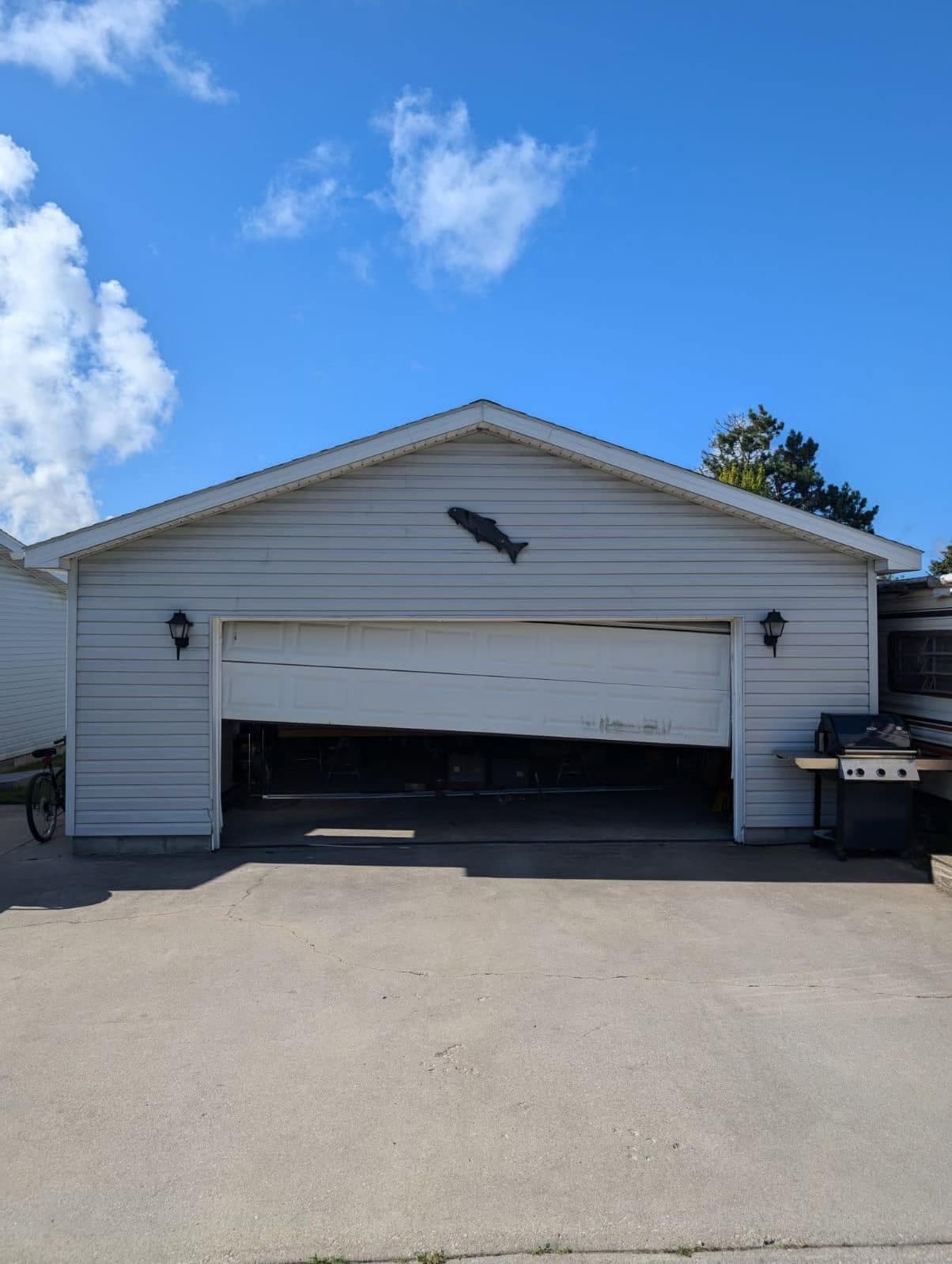
| Door heavy or crooked after a loud bang | Broken spring or cable | No | Yes |
Why does my garage door reverse before it closes
A door that starts down and then reverses is usually reacting to the photo-eye safety sensors. They sit on each side of the door no higher than 6 inches above the floor, and when anything interrupts the invisible beam between them, the opener sends the door back up.
The usual culprits are something in the doorway, a dirty lens, a sensor bumped by a bike or a shovel so it no longer points at its partner, a damaged wire and bright sun. Chamberlain's troubleshooting guide notes that sunlight shining into the receiving sensor can block the infrared light from the sending eye, which is why some doors act up only at one time of day.
If a sensor light stays dark after cleaning and aiming, look along the thin sensor wires for a staple through the wire, a chewed spot or a loose connection at the opener. A failed sensor or a fault inside the opener comes next, and that is a job for garage door opener repair.
Why does my garage door touch the floor and go back up
A door that closes all the way, touches the floor and then reverses usually has its down travel set a little too far, so the opener reads the floor as an obstruction. Chamberlain lists a down travel setting that needs to be decreased as the usual cause, with a problem in the door itself and, rarely, a failed logic board as the others.
Travel and force settings work together, and Chamberlain warns that when one is adjusted the other may need adjusting too. It also says never to increase the force beyond the minimum needed to close the door, because too much force interferes with the safety reversal. After any change, the door must still reverse when it meets a 1-1/2 inch object, which is what a 2x4 laid flat gives you.
In winter, check the floor before anyone touches a setting. An ice ridge or packed snow at the threshold makes the door touch down early, and the opener reverses exactly as it is designed to.
Why does my garage door stop partway down
A door that stops or reverses partway down has usually met resistance from an obstruction, a track or roller that binds or a door that has become hard to move. Chamberlain explains that when a closing door meets an obstruction it reverses, and some newer LiftMaster and Chamberlain models also beep and flash their lights 5 times when that happens.
Look along both tracks for the spot where it hangs up. These are the usual reasons.
- Something in the path: a hose, a mat or a shovel under the door, or debris sitting in the track.
- Binding rollers or hinges: a dry, cracked or broken roller or a loose hinge can make the door drag at the same spot every time.
- A bent track: a bump from a car or a mower can pinch the track so the rollers catch. Our guide to a garage door that comes off its track explains why that calls for care.
- Stiff grease in the cold: thick lubricant makes the door harder to move, and the opener treats that as resistance.
- A door out of balance: weak springs leave the opener lifting weight it was not built to carry. Our garage door balance test shows the safe way to check.
Why won't my garage door close when it's cold or icy
In a Northern Michigan winter the usual reasons are ice at the threshold, a bottom seal frozen to the floor and grease that has stiffened in the cold. Each one makes the door meet resistance or touch down early, and the opener reverses to protect whatever it thinks is in the way.
Meltwater off the car refreezes at the door line, builds a ridge and glues the rubber seal down. Clopay's cold weather guide says to chip the ice away gently or melt it with warm water, then clean and dry the area so it doesn't refreeze. It warns against forcing the door, which can rip the weatherseal, and against using ice melt on a metal door.
For stiff hardware, Clopay recommends a silicone-based lubricant on the metal parts and warns against using WD-40 on a garage door in cold weather. It also notes that spring wire becomes more brittle in the cold.
Traverse City often sees more than 100 inches of lake-effect snow in a season, so clearing the threshold is a yearly routine up here. If a torn seal keeps letting slush in or the door still binds once the ice is gone, our crew handles garage door repair in Traverse City and the towns around it.
Could a broken spring or cable be why my garage door won't close
Yes. A door that won't close and also feels heavy, sits crooked, comes down with a thud or quit after a loud bang from the garage may have a broken spring or a snapped or loose cable. The springs carry the weight of the door and the cables carry that lift to the bottom corners, so when either one fails the door can't travel evenly.
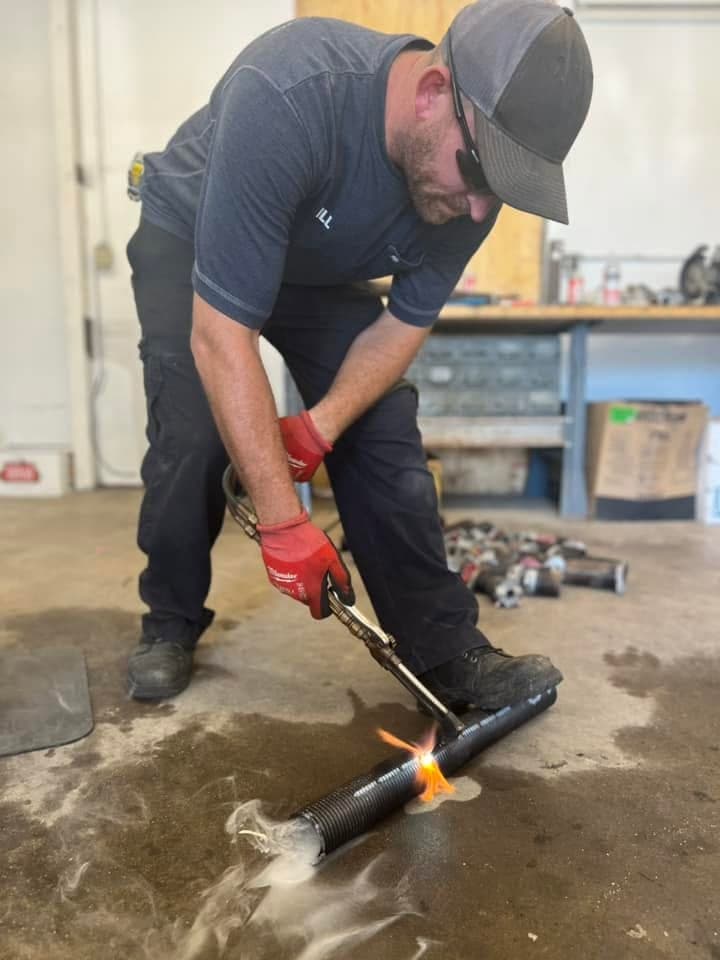
Look without touching. A broken torsion spring shows a gap of a few inches in the coil. A cable hanging slack at a bottom corner or unwound from its drum means one side has lost support, and our guide on what a snapped or loose garage door cable means covers the signs. Replacing springs is work for garage door spring repair, not a weekend project.
How do you close a garage door manually when the opener won't
Close it by hand only if the door is balanced and undamaged: unplug the opener, pull the emergency release, lower the door slowly and lock it. If the door feels unusually heavy, won't stay put or slams shut, Chamberlain says to stop immediately and contact a garage door professional.
- 1Check the door firstLook at the springs and cables from off to the side. If a spring has a gap, a cable is loose or the door hangs crooked, do not pull the release. Keep everyone clear and call.
- 2Unplug the openerPull the plug so nobody runs the door from a remote or keypad while your hands are on it.
- 3Hold the door and pull the releaseChamberlain advises using the emergency release with the door fully closed whenever possible, because a door with weak or broken springs can fall. On a door stuck open, keep a firm hand on it, stand to the side and pull the red cord. If you have any doubt about the springs, leave the door open and call.
- 4Lower it slowlyUse the handle or a flat spot on a section, never the joints between sections, and guide the door all the way down while standing beside it.
- 5Lock itIf the door has a slide bolt or a T-handle lock, engage it so the garage stays secure until the repair.
- 6Reconnect after the repairUnlock the door, pull the release toward the opener and run a full cycle so the trolley latches back on, as our guide to why a garage door won't open explains.
Should you ever bypass the safety sensors to get the door closed
No. The photo eyes keep a closing door from trapping a child, a pet or anything else under it, and jumpering the wires, taping over the lenses or mounting the sensors up high removes that protection.
The U.S. Consumer Product Safety Commission added the requirement for external entrapment protection, such as an electric eye, in 1993. It urges homeowners to test the reverse function with a 2x4 on the floor and to inspect the door and opener every 30 days. If the door does not reverse on the 2x4, the CPSC says to disengage the opener until it is adjusted, repaired or replaced.
Fix the cause instead. Stop troubleshooting and call when you see any of these:
- A sensor light that stays off or flickers after cleaning and aiming.
- A door that reverses or stops at the same spot every time, which points to track, roller or hinge work for our garage door repair crew.
- A door that closes only while you hold the wall button, or not at all on a newer opener.
- Any sign of a broken spring, a loose cable or a crooked door.
- An opener that clicks, grinds or keeps flashing a code you can't clear.
Sources
- 1.Garage Door Opener Light Blinks but The Door Won't Close · Chamberlain Group
- 2.My Garage Door Will Not Fully Close · Chamberlain Group
- 3.The Garage Door Comes Down, Hits the Floor and Reverses · Chamberlain Group
- 4.How to Manually Open or Close a Garage Door · Chamberlain Group
- 5.Non-Reversing Automatic Garage Door Openers Are a Hazard (Publication 523) · U.S. Consumer Product Safety Commission
- 6.Fixing Garage Door Problems from Cold Weather · Clopay
Free estimate
Have our crew take a look
Three quick steps and our office calls you back during business hours. Most repairs are finished on the first visit, and every truck rolls out stocked.
Or call the office(231) 360-5442Mon to Fri · 7:30 am to 4:00 pm · Closed weekends
Request service
About a minute. Our office calls you back.
Step 1 of 3
- Your property
- What's going on
- Where we call you